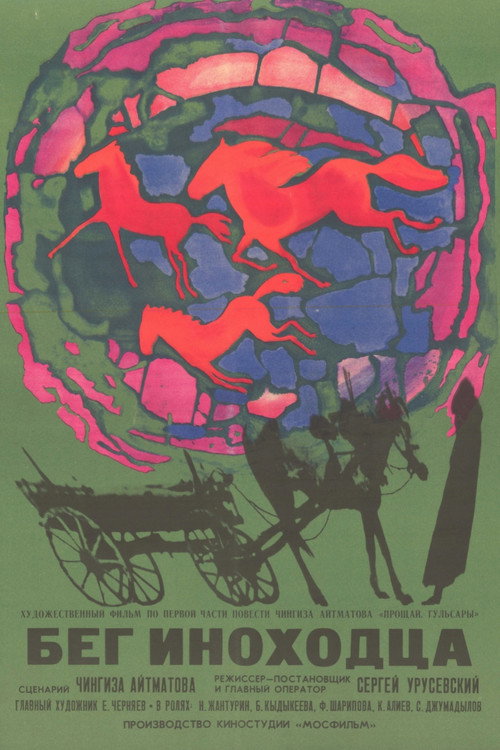
Goodbye, Gyulsary!
1969
No user ratings available yet
Diversity score: 6.3 out of 10

1966
Director
Shaken Aimanov
Runtime
86 minutes
Average Rating
No ratings yetSynopsis
An old man decides to find the body of his son, a Kazakh soldier who died fighting somewhere in Russia, to bury him in the land of his ancestors. Travelling across the land with his grandson, they discover the harsh reality of war. And when they finally find the coveted grave, they realise that many brothers-in-arms are buried with the soldier. Every inch of the great homeland becomes the land of our fathers, the land of the ancestors...
Overall Score
Fair
Category Breakdown
LGBTQ+ Representation
The film lacks explicit LGBTQ+ characters or non-heteronormative narratives. It focuses on traditional familial structures and patriarchal lineage, reflecting the cinematic constraints of 1966.
Gender Representation
The narrative is driven by male characters, specifically a grandfather and grandson. Agency is centered on men navigating loss and the harsh realities of war.
Racial & Ethnic Diversity
The film provides strong ethnic representation by centering Kazakh identity. It prioritizes the specific cultural necessity of returning a fallen soldier to his native soil.
Religious & Cultural Diversity
The story emphasizes ancestral morality and the sanctity of burial rites. It prioritizes spiritual connections to the land over purely centralized political themes.
Disability Representation
There are no discernible depictions of physical or neurodivergent disabilities. The focus remains on the psychological and physical toll of the journey.
Strengths
Areas for Improvement
AI Analysis
Shaken Aimanov’s drama serves as a powerful vehicle for ethnic reclamation, centering Kazakh identity within a broader geopolitical conflict. By framing the homeland through the specific lived experiences of the Kazakh people, the film resists the erasure of regional identities. However, the film adheres to the social hierarchies of its era. The narrative is heavily male-centric, focusing on patriarchal lineage and traditional family structures. This limits the scope of gender representation and agency. Ultimately, the film succeeds as a work of cultural preservation. While it lacks diversity in gender and LGBTQ+ themes, its commitment to authentic ethnic storytelling provides a significant and necessary perspective.
1969
2004
2006

1966
1986
2003
2021
2014

2008
1967
2011
2019
No reviews yet. Be the first to share your thoughts on this movie!
Use the rating form above to leave a star rating and optional review.