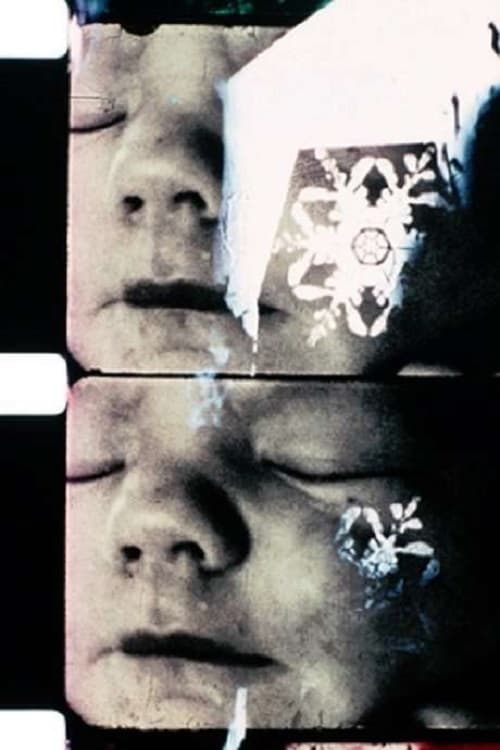
The Art of Vision
1965
No user ratings available yet
Representation score: 0.6 out of 10
Representation Score
Fair
1972
Not RatedDirector
Stan Brakhage
Runtime
32 minutes
Average Rating
No ratings yetNew Showbiz Analysis
Stan Brakhage’s work serves as a formalist challenge to traditional cinematic conventions. By avoiding conventional storytelling, it limits its ability to portray specific identities or social roles through character development. However, the film succeeds in disrupting traditional visual hierarchies by treating the human body as a site of pure visual phenomena rather than a social or moral entity. Ultimately, while it excels in dismantling traditional consumption patterns, it lacks the narrative tools needed to fully explore identity-driven themes.
Category Breakdown
The film includes moments of same-sex intimacy through its experimental montage. These scenes, however, do not develop into full narratives and challenge traditional assumptions about heterosexual relationships.
By removing dialogue and plot, the film sidesteps typical gender hierarchies and domestic scenarios. Instead, bodies are shown as rhythmic, abstract elements of light and motion.
The montage showcases various physical forms from period adult cinema. However, the fragmented structure prevents a deeper exploration of racial identity or the overlapping aspects of identity.
Brakhage challenges the Western perspective by recontextualizing erotic imagery into an abstract study of perception. The work prioritizes individual visual experiences over traditional social structures.
The abstract, non-narrative structure does not provide a framework for depicting disabilities or neurodivergence as character traits.
Present on Screen
Limited or Absent
Official Synopsis
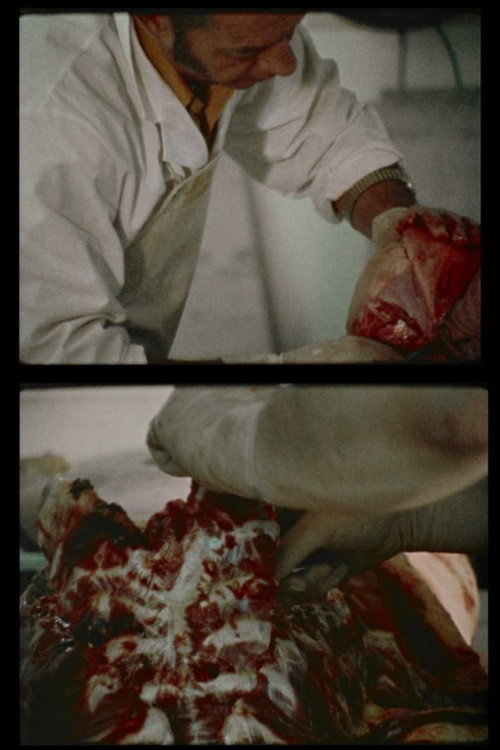
At a morgue, forensic pathologists conduct autopsies of the corpses assigned. "S. Brakhage, entering, WITH HIS CAMERA, one of the forbidden, terrific locations of our culture, the autopsy room. It is a place wherein, inversely, life is cherished, for it exists to affirm that no one of us may die without our knowing exactly why. All of us, in the person of the coroner, must see that, for ourselves, with our own eyes. It is a room full of appalling particular intimacies, the last ditch of individuation. Here our vague nightmare of mortality acquires the names and faces of OTHERS. This last is a process that requires a WITNESS; and what 'idea' may finally have inserted itself into the sensible world we can still scarcely guess, for the CAMERA would seem the perfect Eidetic Witness, staring with perfect compassion where we can scarcely bear to glance." – Hollis Frampton
1965
1978
2019
1988
1996

1959
1991
1964
No reviews yet. Be the first to share your thoughts on this movie!
Use the rating form above to leave a star rating and optional review.