
The Affair
1967
No user ratings available yet
Representation score: 6.4 out of 10
Representation Score
Fair
2011
Director
Hikari
Runtime
23 minutes
Average Rating
No ratings yetNew Showbiz Analysis
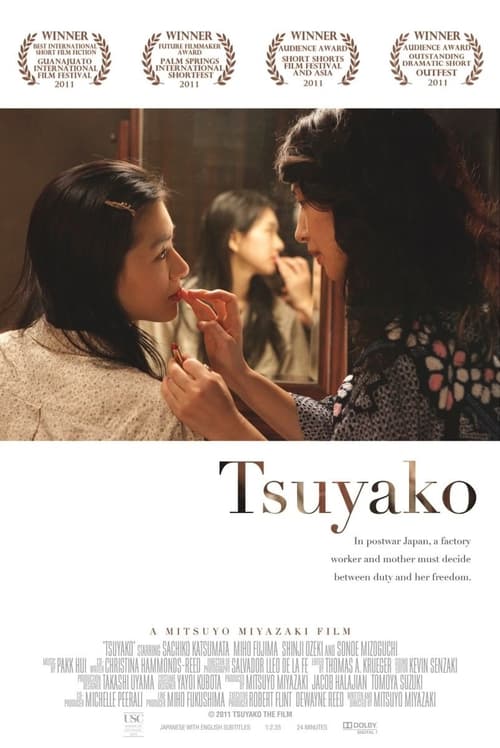
Tsuyako is a character-driven drama centered on the struggle for personal autonomy in a restrictive postwar Japanese society. The film emphasizes women's ability to drive the story, moving beyond domestic archetypes to present a complex portrait of motherhood and labor. While the film offers a strong critique of social duty, it remains limited in its explicit representation of diverse identities. The narrative primarily focuses on the tension between the individual and the state/family structure. Ultimately, the film serves as a nuanced study of human connection and the friction between desire and social expectation.
Category Breakdown
The film touches on themes of freedom versus duty, which might suggest non-traditional relationship dynamics. However, there is no clear indication of LGBTQ+ identities within the story.
Tsuyako is a central figure whose actions drive the plot. The story highlights female subjectivity by focusing on her experiences as both a factory worker and a mother.
Set in postwar Japan, the film focuses on a specific national and ethnic identity. This localized perspective contrasts with Western-centric cinematic standards.
The narrative challenges traditional Japanese societal expectations by highlighting the tension between individual liberation and family obligations. It examines the conflict between institutional pressures and personal truth.
There is no evidence of characters with physical or neurodivergent disabilities being included in this production.
Present on Screen
Limited or Absent
Official Synopsis
In postwar Japan, Tsuyako, a factory worker and mother, must decide between duty and love, her family and her freedom.
1967

1955

1985

2014

1964

1949

1951

2014
No reviews yet. Be the first to share your thoughts on this movie!
Use the rating form above to leave a star rating and optional review.