
Crying Out Love in the Center of the World
2004
No user ratings available yet
Representation score: 4.3 out of 10
Representation Score
Limited
1985
Director
Shinichiro Sawai
Runtime
96 minutes
Average Rating
No ratings yetNew Showbiz Analysis
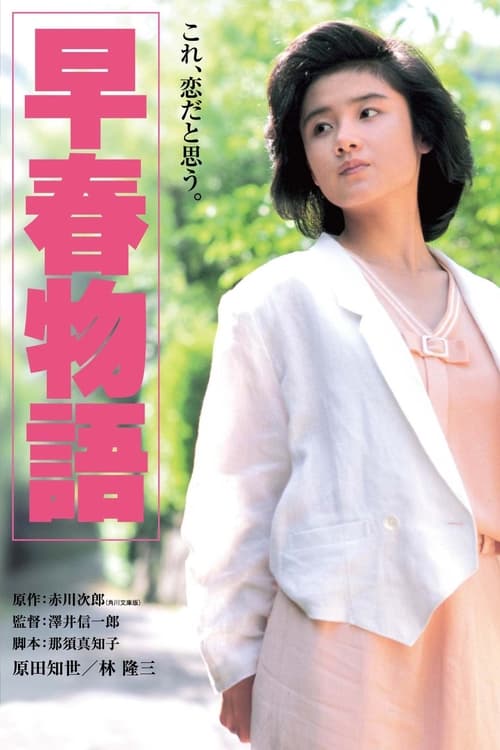
Early Spring Story is a localized, character-driven drama that focuses on personal emotional growth rather than broader social critique. The film's strength lies in its central female protagonist, who uses photography and historical inquiry to explore her identity and family legacy. While the film provides meaningful ability to act to its lead character, it lacks the multi-layered approach necessary for broader diversity impact. The narrative remains within the conventional frameworks of coming-of-age cinema and mid-80s Japanese social contexts.
Category Breakdown
The film touches on themes of romance but does not include explicit representations of non-traditional gender identities. It does not challenge the assumption that everyone is straight or cisgender.
A female protagonist drives the plot through her artistic passion and investigation of her mother's history. This gives her a significant role in shaping the story, moving beyond passive female roles.
Set within a Japanese context, the film reflects the demographic homogeneity typical of mid-80s domestic cinema. It does not feature diverse ethnic identities or actors from different backgrounds.
The story explores subjective morality through the lens of maternal legacy and memory. However, it does not explicitly address social hierarchies or traditional institutions.
The narrative does not include any characters navigating physical, neurodivergent, or mental health conditions.
Present on Screen
Limited or Absent
Official Synopsis
A Japanese high school student passionate about photography discovers love while confronting the past choices of her deceased mother.
2004

2009

2018

1998
2003
1967
2014

2003
No reviews yet. Be the first to share your thoughts on this movie!
Use the rating form above to leave a star rating and optional review.