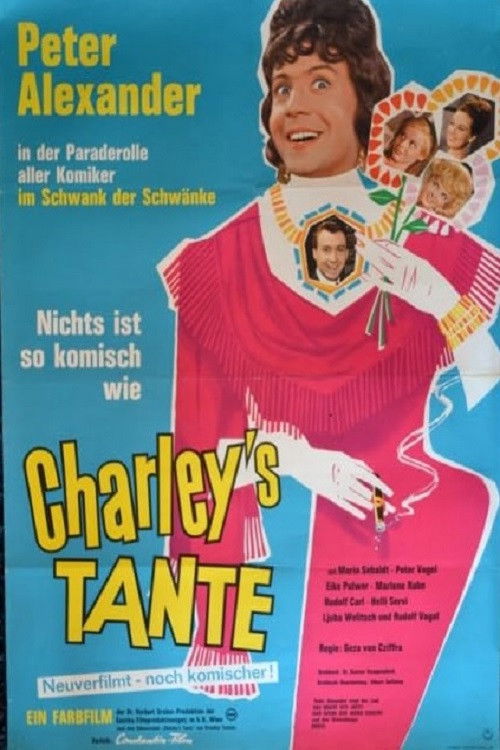
Charley's Aunt
1963
No user ratings available yet
Diversity score: 2.8 out of 10

1940
TV-GDirector
Walter Forde
Runtime
75 minutes
Average Rating
No ratings yetSynopsis
Charley's (Big-Hearted) Aunt is a 1940 British comedy film directed by Walter Forde starring Arthur Askey and Richard Murdoch as Oxford 'scholars'. The film is one of many to be made based on the farce Charley's Aunt. Taking inspiration from a well-known Victorian play, a modern-day prankster poses as a wealthy woman in a ploy to prevent him and his friends from being expelled from college.
Overall Score
Limited
Category Breakdown
LGBTQ+ Representation
The film uses gender masquerade as a comedic trope for deception. This male-to-female disguise serves a prank rather than exploring queer identity or non-cisnormative experiences.
Gender Representation
Comedy is driven by traditional gender roles and the perceived absurdity of femininity. Women lack intellectual authority, as the female persona is merely a tool for male protagonists.
Racial & Ethnic Diversity
The Oxford collegiate setting reflects a homogeneous social landscape. The narrative focuses on Anglo-Saxon academic life without any indication of diverse ethnic perspectives or intersectional casting.
Religious & Cultural Diversity
The story operates within a traditional Western institutional framework. It celebrates the scholar archetype and uses the university setting as a playground for conventional situational hijinks.
Disability Representation
There is no evidence of characters with visible or invisible disabilities being integrated into the narrative arc.
Strengths
Areas for Improvement
AI Analysis
Charley's (Big-Hearted) Aunt is a product of its 1940s British context, functioning as a traditional farce. The film relies heavily on established comedic structures that reinforce existing social and gendered hierarchies rather than challenging them. The narrative architecture is built around a central deception where a man poses as a woman. This device is used for situational humor and academic maneuvering rather than any meaningful exploration of identity or social critique. Ultimately, the film presents a narrow, homogeneous view of collegiate life. It prioritizes slapstick and conventional morality, offering very little room for intersectional representation or diverse cultural perspectives.
1963
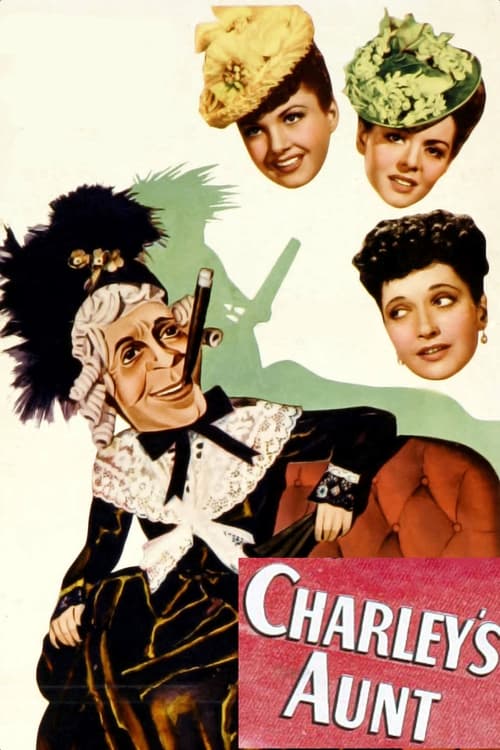
1941
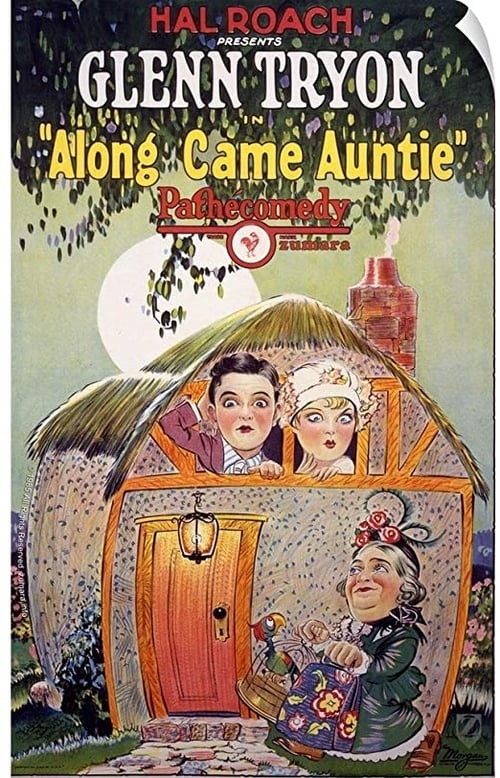
1926
1935
1958
1975
1931
1923
1936
1920
1936
1936
No reviews yet. Be the first to share your thoughts on this movie!
Use the rating form above to leave a star rating and optional review.