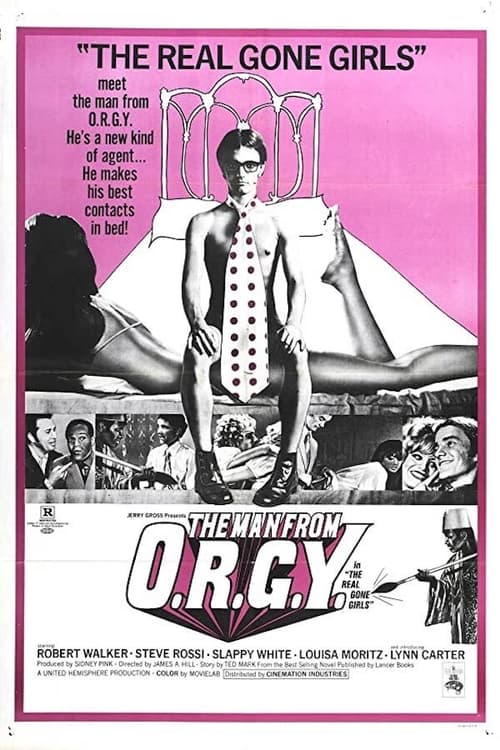
The Man from O.R.G.Y.
1970
No user ratings available yet
Diversity score: 2.0 out of 10

1975
RDirector
Vernon P. Becker
Runtime
93 minutes
Average Rating
No ratings yetSynopsis
A Victorian aristocrat buys a former madhouse and converts it into a "love nest" to woo and bed Alice, the lovely blonde Minister's daughter he meets in an art gallery.
Overall Score
Limited
Category Breakdown
LGBTQ+ Representation
The film follows a conventional romantic trajectory between a male aristocrat and a female lead. There is no evidence of non-cisnormative identities or critiques of heteronormativity.
Gender Representation
The plot reinforces traditional hierarchies by centering on the male protagonist's agency. The female lead, Alice, is positioned as a target of desire rather than an autonomous character.
Racial & Ethnic Diversity
The narrative focuses on Anglo-Saxon aesthetic standards, specifically highlighting a blonde female lead. It appears to reflect the homogeneous social structures of the Victorian period.
Religious & Cultural Diversity
The story operates within traditional Western class structures involving aristocracy and ministerial status. It uses these institutions as a comedic backdrop rather than providing a systemic critique.
Disability Representation
While the setting is a former madhouse, there is no evidence of neurodivergence being portrayed with agency. Mental health conditions are not presented as central character arcs.
Strengths
Areas for Improvement
AI Analysis
A Man with a Maid is a traditional period comedy that adheres to the established social hierarchies of its era. The narrative architecture prioritizes classical gender dynamics and lacks intersectional complexity. The film relies on antiquated tropes, such as the male protagonist driving the plot through property acquisition to woo a female interest. This creates a framework where characters are defined by status and romantic pursuit rather than diverse identities. Ultimately, the work functions as a conventional 1970s comedy, reflecting the homogeneous social structures and aesthetic standards of a Victorian setting without offering systemic critique.
1970

1981
1973
1940

1967

1974

1969

2000
1963
1956
1935
1946
No reviews yet. Be the first to share your thoughts on this movie!
Use the rating form above to leave a star rating and optional review.