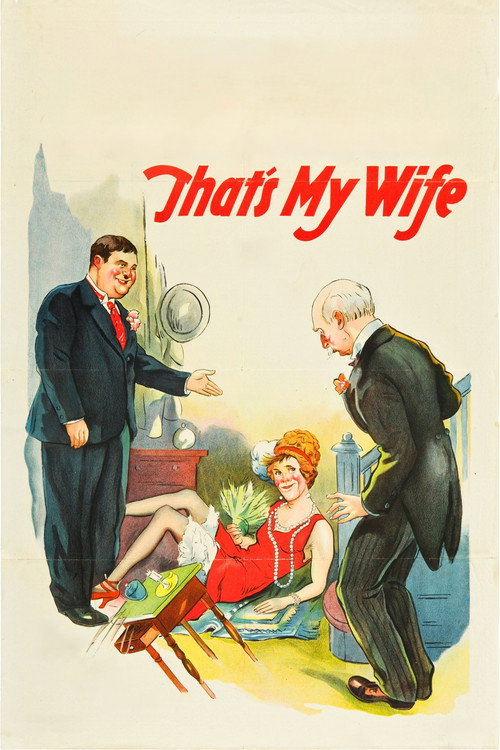
That's My Wife
1929
No user ratings available yet
Representation score: 1.2 out of 10
Representation Score
Minimal
1926
PassedDirector
Richard Wallace, Fred Guiol
Runtime
23 minutes
Average Rating
No ratings yetNew Showbiz Analysis
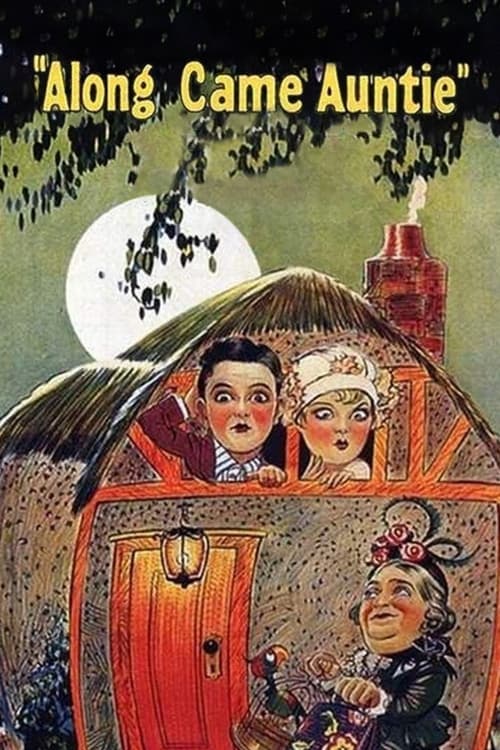
Along Came Auntie is a conventional silent comedy that emphasizes situational humor over social critique. The plot hinges on a deception involving a divorced couple trying to please a disapproving relative for financial gain. The film operates within the rigid social structures of its time. Although the female lead initiates the central scheme, the narrative stays rooted in traditional marital and familial pressures. Overall, the film lacks complexity in representing various identities and social issues. It functions as a period-appropriate comedy of manners without challenging traditional norms.
Category Breakdown
The film centers on a divorced couple and does not include any characters with non-traditional gender identities. The story follows the traditional romantic structures of the 1920s.
A female character drives the main conflict by starting a scheme to obtain money. However, the plot revolves around maintaining a traditional marriage to meet family expectations.
The film likely reflects the typical casting practices of early 20th-century American silent comedies, which were predominantly white. There is no indication of significant non-white or diverse ethnic representation.
The story is a comedy of manners focused on deception for financial gain. It explores subverting familial authority but does not provide a broader critique of societal or Western institutions.
There is no evidence of characters with visible or invisible disabilities in the narrative or historical records.
Present on Screen
Limited or Absent
Official Synopsis
A divorced couple try to pretend they are still happily married in order to get $100,000 from the woman's divorce-disapproving aunt.
1929
1926
1940
1933
1935

1942
1914
1937
No reviews yet. Be the first to share your thoughts on this movie!
Use the rating form above to leave a star rating and optional review.