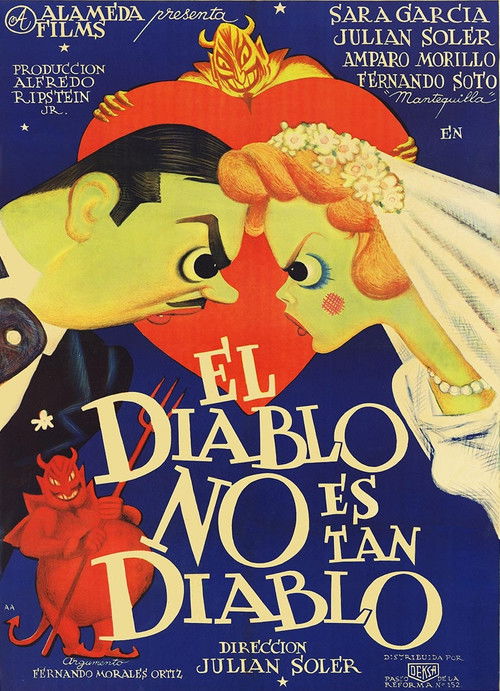
El diablo no es tan diablo
1949
No user ratings available yet
Representation score: 1.3 out of 10
Representation Score
Limited
1947
Director
Miroslav Cikán
Runtime
0 minutes
Average Rating
No ratings yetNew Showbiz Analysis
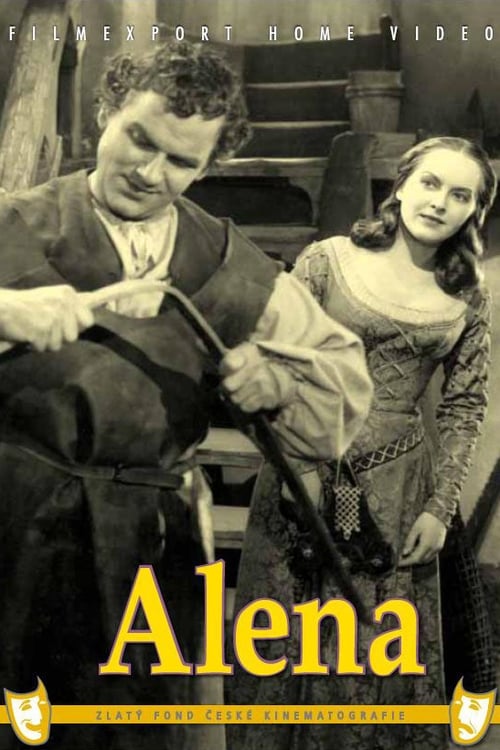
Alena is a mid-century fantasy comedy that emphasizes moral ambiguity rather than modern multi-layered identity. While it lacks diversity in terms of race and sexual orientation, it successfully disrupts traditional social and religious hierarchies. The film's strength lies in its subversion of gendered power dynamics and its critical view of rigid moral frameworks. By focusing on Alena's influence and the Devil's complex role, it moves beyond simple folk clichés. However, the production remains limited by the demographic norms of 1947 Central European cinema. It lacks any meaningful representation of disability, LGBTQ+ identities, or racial diversity.
Category Breakdown
The film centers on a traditional love triangle involving a husband, wife, and a ruler. There are no characters with queer identities or those who challenge straight-centered norms.
Alena is the central character who drives the plot, influencing the actions of the men around her. The film challenges traditional masculine roles by showing the husband's vulnerability and insecurity.
Set in a mid-century European setting, the film follows the homogeneous casting typical of its time. There is no evidence of diverse racial or ethnic representation.
The story portrays the Devil as a complex figure who protects and loves, challenging traditional religious morality and questioning the stability of conventional social institutions.
The narrative does not include characters with physical or neurodivergent disabilities. There is no representation of disability in the story.
Present on Screen
Limited or Absent
Official Synopsis
Master armourer Tomás has young wife Alena, of whom he is very jealous. One day the ruler of town sees Alena and decides to win her over for himself. To get a free hand for his love affairs, he sends Master Tomás to acquire more skills in Flanders. Jealous husband does not know how to secure fidelity of his beautiful wife while he is away, and finally accepts aid of the devil, to whom he signs his soul as a reward. Devil in the disguise of Master Ondrej works in Tomás's workshop and protects Alena against various courtiers and the ruler of town. But finally he falls in love with Alena himself and becomes her lover.
1949
1960
1957
1988
1970
1913
1988
1980
No reviews yet. Be the first to share your thoughts on this movie!
Use the rating form above to leave a star rating and optional review.