
Las cinco advertencias de Satanás
1945
No user ratings available yet
Representation score: 2.1 out of 10
Representation Score
Minimal
1949
Director
Julián Soler
Runtime
95 minutes
Average Rating
No ratings yetNew Showbiz Analysis
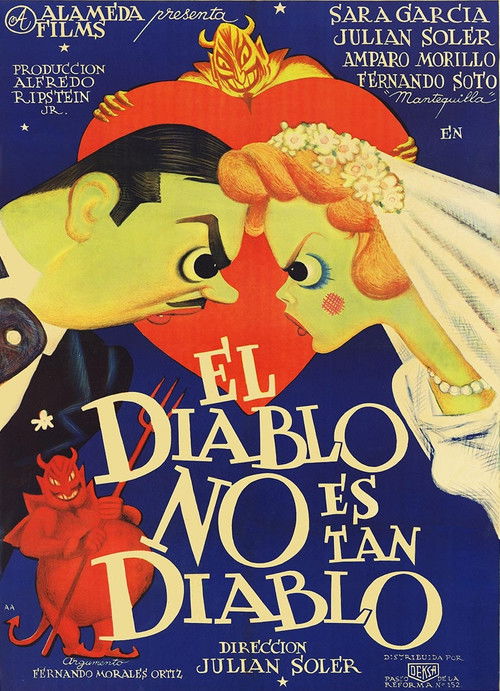
El diablo no es tan diablo functions as a traditional moral fable typical of the Golden Age of Mexican cinema. The narrative employs supernatural elements to explore interpersonal conflicts through the lens of established social and religious frameworks. The film upholds the status quo rather than challenging systemic hierarchies, relying on conventional archetypes and a moralistic worldview to drive its comedic and fantasy elements. While it offers a culturally specific Mexican perspective, it lacks depth in representing multiple aspects of diversity.
Category Breakdown
The film does not include any queer narratives or characters with non-traditional gender identities.
The story revolves around a couple facing marital issues, likely reinforcing traditional gender roles.
The production highlights Mexican identity but emphasizes a homogeneous national identity rather than a blend of ethnicities.
The plot uses a devil figure to explore spiritual consequences, relying on traditional religious morality.
There are no characters with physical or neurodivergent disabilities in this work.
Present on Screen
Limited or Absent
Official Synopsis
A couple in crisis receives a mysterious visit from the devil, who offers them a tempting solution to their problems-but his true intention is to claim their souls in exchange.
1945
1960

1988

1988
1980

1941

1947

1943
No reviews yet. Be the first to share your thoughts on this movie!
Use the rating form above to leave a star rating and optional review.