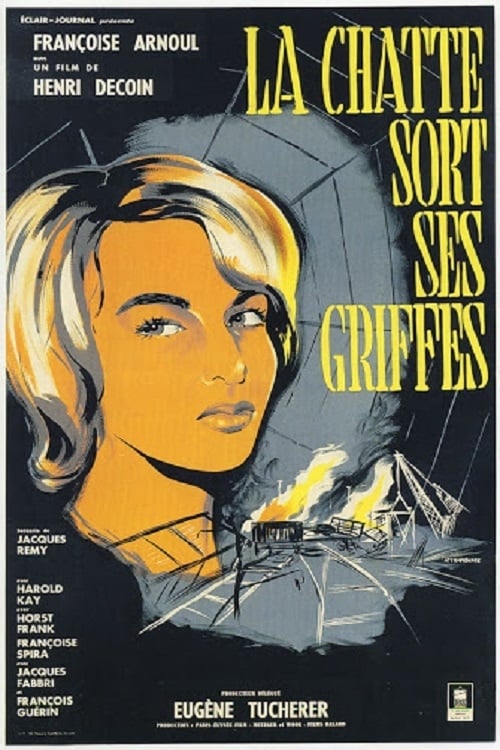
The Cat Shows Her Claws
1960
No user ratings available yet
Representation score: 2.9 out of 10

Representation Score
Fair
1958
Director
Henri Decoin
Runtime
108 minutes
Average Rating
No ratings yetNew Showbiz Analysis
The film's primary strength lies in its subversion of traditional gender roles. By placing Cora in a position of clandestine leadership, the narrative provides a woman with high levels of ability to act and political importance during a period of systemic upheaval. However, the work is limited by the social norms of 1958 European cinema. It lacks diverse representation, showing almost no LGBTQ+ identities, racial or ethnic diversity, or disability. Ultimately, while the film offers a sophisticated look at individual ability to act amidst moral ambiguity, it remains demographically narrow and constrained by its historical context.
Category Breakdown
The film focuses on a romance between a man and a woman, following the heterosexual norms typical of 1950s French drama. There are no LGBTQ+ narratives.
Cora challenges traditional gender roles by taking over her late husband's role as a Resistance leader, gaining significant strategic authority and disrupting mid-century stereotypes of female passivity.
Set in Occupied Paris, the cast reflects the homogeneous demographics of the time. The story emphasizes European geopolitical conflicts without addressing racial or ethnic diversity.
The wartime setting explores moral relativism and situational ethics. The narrative prioritizes individual survival and ideological loyalty over the stability of traditional state and legal institutions.
There are no characters with visible or invisible disabilities serving as central narrative drivers or possessing specific ability to act within the film.
Present on Screen
Limited or Absent
Official Synopsis
During the Occupation, Cora takes the place of her dead husband at the head of a Resistance network. One evening, she sympathizes with Bernard, a Swiss journalist. However, he is actually an undercover German officer who is close to the man ordered to find her using an Identikit picture...
1960

1976
1960
1959
1943

1952
1957
1944
No reviews yet. Be the first to share your thoughts on this movie!
Use the rating form above to leave a star rating and optional review.