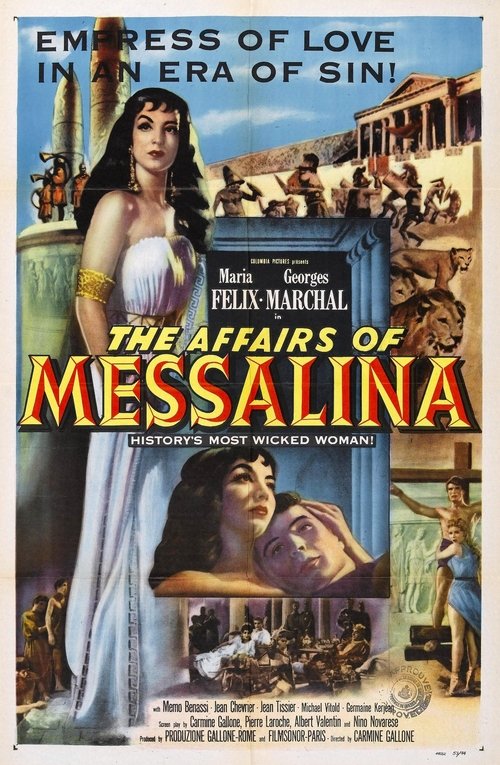
The Affairs of Messalina
1951
No user ratings available yet
Representation score: 5.2 out of 10
Representation Score
Limited
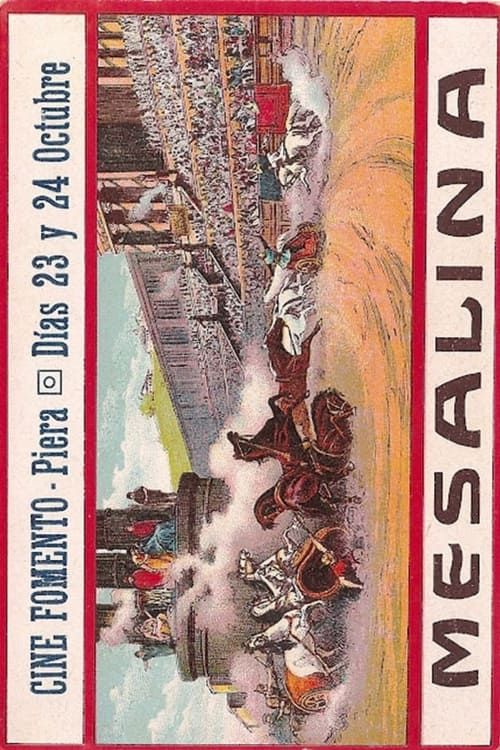
1924
Director
Enrico Guazzoni
Runtime
125 minutes
Average Rating
No ratings yetNew Showbiz Analysis
Messalina (1924) functions as a historical melodrama that highlights women's ability to drive the story through political maneuvering. By centering a woman who destabilizes the Roman state, the film offers a rare look at female empowerment in early silent cinema. However, the film is constrained by the moralistic frameworks of its time. The protagonist's role is frequently tied to themes of chaos and moral transgression, which complicates her position as a fully empowered figure. Additionally, the ethnic diversity present in the cast may be undermined by the era's likely Eurocentric casting practices. Ultimately, the film challenges traditional hierarchies but remains tied to the period's conventional social and moral structures.
Category Breakdown
The film centers on heterosexual relationships and does not include any LGBTQ+ identities or same-sex intimacy. There is no representation of LGBTQ+ characters.
The film features Messalina, who drives the plot through political manipulation and assassination. Her actions challenge male imperial leadership, but her autonomy is often framed through clichés of wickedness.
The story includes diverse characters such as an Egyptian princess and a Greek slave. However, the era's likely Eurocentric casting practices may sideline the ethnic diversity.
The narrative critiques institutional corruption and imperial decadence. It portrays the Roman structure as a site of moral decay, avoiding a purely celebratory view of Western antiquity.
There is no documented evidence of characters with visible or invisible disabilities in the story.
Present on Screen
Limited or Absent
Official Synopsis
In ancient Rome, tyrannical Emperor Caligula is assassinated through the machinations of Messalina. She then makes a conquest of Marcus, who forces the Senate to name her husband, Claudius, as emperor. Messalina's wicked ways continue when she falls in love with Ennio, a slave. Ennio is also loved by Egyptian princess Mirit, but he loves neither of them, preferring the company of Ela, a Greek slave.
1951
1914
1960

1957
1912

1951
1917
1934
No reviews yet. Be the first to share your thoughts on this movie!
Use the rating form above to leave a star rating and optional review.