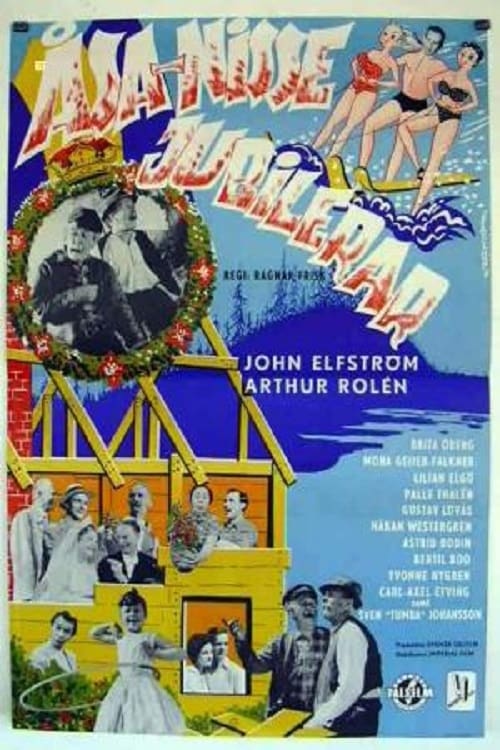
Åsa-Nisse jubilerar
1959
No user ratings available yet
Representation score: 0.5 out of 10
Representation Score
Minimal
1949
Director
Ragnar Frisk
Runtime
102 minutes
Average Rating
No ratings yetNew Showbiz Analysis
Åsa-Nisse is a typical mid-century regional comedy that mirrors the demographic and social conditions of 1940s Sweden. The narrative is centered on localized humor and established social hierarchies. The film presents a homogeneous community where gender roles and ethnic identities are strictly conventional. Although the 'trickster' character offers minor social tension, it does not challenge broader social norms. Overall, the film serves as a cultural snapshot of its time, emphasizing traditional storytelling and social stability over progressive or subversive themes.
Category Breakdown
The film adheres to traditional heterosexual norms, with no representation of LGBTQ+ identities or non-cisgender characters. The plot centers around a woman navigating relationships with men, without exploring any non-traditional sexual orientations or gender identities.
Gender roles in the film are traditional and hierarchical. Women are primarily portrayed in domestic or romantic contexts, while men occupy positions of authority and social influence within the community.
The cast is ethnically uniform, reflecting the rural Swedish setting of the period. There is no depiction of racial diversity or non-white characters in the film.
This folk comedy emphasizes social cohesion and traditional rural life. While the protagonist creates light-hearted trouble, the film upholds communal stability without critiquing societal institutions.
There are no prominent depictions of physical or neurodivergent disabilities. Characters appear to function within standard physical and cognitive parameters for the genre.
Present on Screen
Limited or Absent
Official Synopsis
At a parish meeting Åsa-Nisse suggests that they should hire a common home help, who could give their wives some relief by staying one week at each household. The meeting assents and decides that the order of her rotation should be established by lot. The two bachelors of the village claim their right to the home help as well, arguing that they are also taxpayers. When Elsa Haglund arrives from Gothenburg she starts her first week of work at one of the two bachelors, the village shop-keeper Sjökvist. He is immediately infatuated by her and begins a flirtation. At the end of the week Elsa happens to meet the other bachelor, Eric Broo, called "the singing farmer". She falls in love with him, but doesn't know how to hook him, as he is very shy and unskilled in courting women. In the meantime Åsa-Nisse, the village rogue, carries out some of his pranks.
1959

1962
1968
1938
1956
1941
1949
1965
No reviews yet. Be the first to share your thoughts on this movie!
Use the rating form above to leave a star rating and optional review.