Should Husbands Work?
1939
No user ratings available yet
Representation score: 1.0 out of 10
Representation Score
Limited
1941
Director
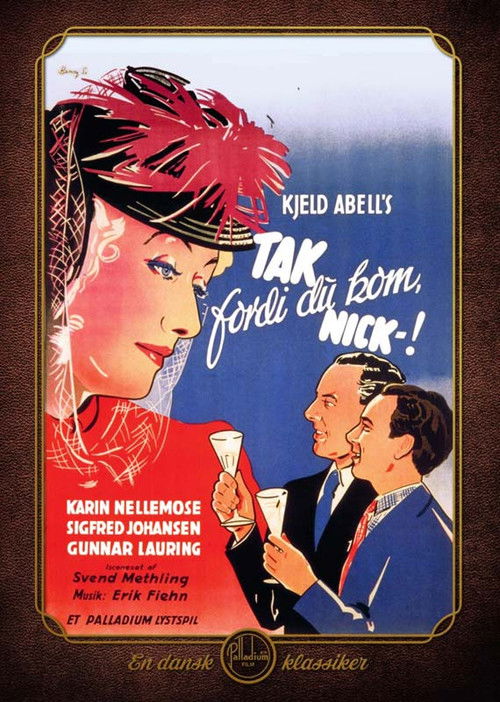
Svend Methling
Runtime
92 minutes
Average Rating
No ratings yetNew Showbiz Analysis
Tak fordi du kom (1941) presents a progressive perspective on domestic dynamics for its time. By focusing on a woman who rejects her traditional role as a housewife, the film challenges the rigid gender hierarchies typical of early 20th-century Danish cinema. However, the film is constrained by its historical context. It lacks representation of LGBTQ+ identities and racial diversity, reflecting the homogeneous society of the period. The narrative remains centered on a traditional European setting with limited exploration of broader social diversities. Ultimately, the film's strength lies in its willingness to question traditional family structures and masculine authority, even though it does not address wider social diversities.
Category Breakdown
The film lacks explicit LGBTQ+ characters or non-straight relationships. The plot centers on a husband, wife, and a male vagabond involved in a domestic conflict.
Anna Louise disrupts traditional gender roles by rejecting her housewife duties. The narrative showcases a role reversal between her and the vagabond, while the husband struggles to retain his authority.
The production reflects the homogeneous society of 1941 Denmark. There is no indication of non-white actors or diverse ethnic backgrounds in the story.
The story questions the sanctity of marriage and traditional family structures. It highlights the vagabond as a catalyst for change, emphasizing individual freedom over conventional stability.
There is no mention of characters with physical, sensory, or neurodivergent disabilities in the narrative.
Present on Screen
Limited or Absent
Official Synopsis
Anna Louise is tired of her life as a housewife in the country. So she seizes the opportunity when the vagabond Nick randomly rings the doorbell. She invites him in, and together they do all the work in the summer villa after the maid is sent on vacation. Anna Louise starts raising Nick, but soon the roles are reversed, so that Nick is raising Anna Louise. Then Anna Louise's husband arrives and he has difficulty handling the situation. Anna Louise and Nick leave the summer house together, with Anna Louise staying in the house maid's room without her husband's knowledge.
1939
1938
1928
1985
1952
1961
1963
1958
No reviews yet. Be the first to share your thoughts on this movie!
Use the rating form above to leave a star rating and optional review.