Field Diary
1982
No user ratings available yet
Representation score: 3.7 out of 10
Representation Score
Fair
2017
Director
Gilad Baram
Runtime
72 minutes
Average Rating
No ratings yetNew Showbiz Analysis
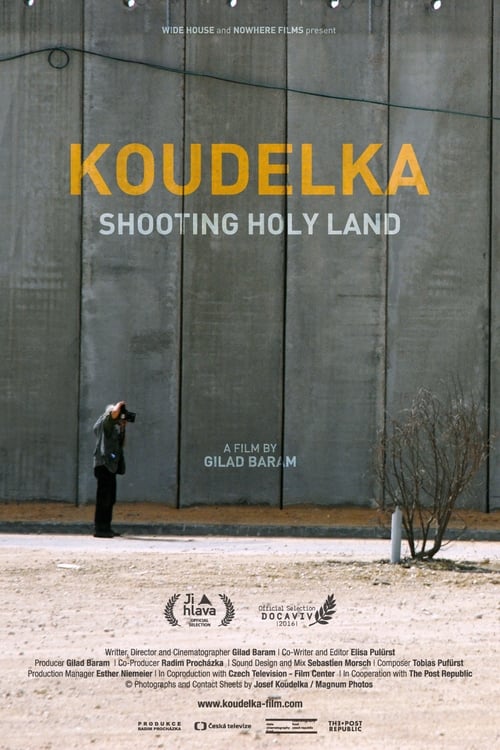
Koudelka Shooting Holy Land is a profound observational documentary that avoids sanitized depictions of the Middle East. By focusing on the West Bank and the separation wall, the film centers the systemic complexities of occupation and the lived realities of diverse ethnic groups. The work succeeds by using photographic witness to deconstruct traditional nationalist narratives. It shifts the focus from religious sanctity to the harsh, sociopolitical realities of conflict and state authority. However, the film remains narrow in its character focus, heavily anchored to a single male protagonist, which limits the breadth of gender and identity representation.
Category Breakdown
The film does not explicitly focus on LGBTQ+ narratives or identities. Instead, it concentrates on the landscape and photographic documentation of events.
The narrative centers on Josef Koudelka's male perspective and follows his individual artistic journey through a traditional protagonist model.
The film highlights the lived experiences of populations within the Israel-Palestine conflict. It prioritizes the visual ability to act of underrepresented communities in occupied territories.
The documentary critiques geopolitical structures by framing the landscape as a site of political struggle rather than religious sanctity. It emphasizes systemic friction.
There is no evidence that disability or neurodivergence serves as a central theme or character arc in this documentary.
Present on Screen
Limited or Absent
Official Synopsis
Czech Photographer Josef Koudelka grew up behind the Iron Curtain and always wanted to know "what was on the other side". Forty years after capturing the iconic images of the Soviet invasion of Prague in 1968, the legendary Magnum photographer arrives in Israel and Palestine. On first seeing the nine-meter-high wall built by Israel in the West Bank, Koudelka is deeply shaken and embarks on a four-year project in the region which will confront him once again with the harsh reality of violence and conflict. Director Gilad Baram, Koudelka's assistant at the time, follows him on his journey through the Holy Land from one enigmatic and visually spectacular location to another.
1982
2018
2005
2011
2018
2014
1974
2024
No reviews yet. Be the first to share your thoughts on this movie!
Use the rating form above to leave a star rating and optional review.