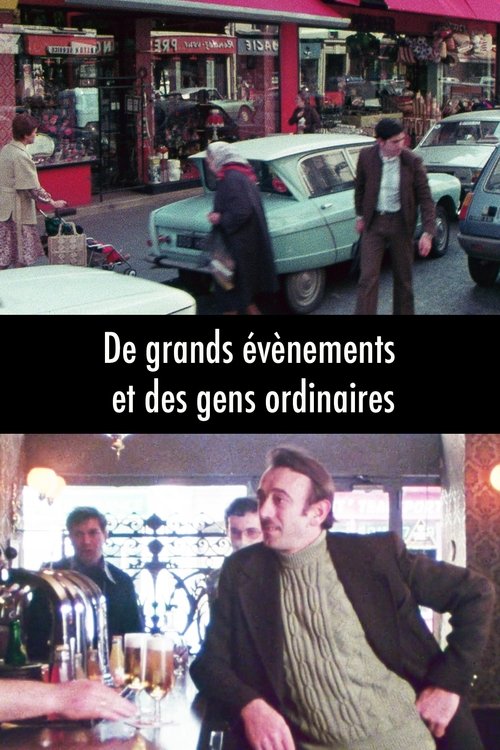
Of Great Events and Ordinary People
1980
No user ratings available yet
Diversity score: 6.8 out of 10

1979
Director
Luc Moullet
Runtime
115 minutes
Average Rating
No ratings yetSynopsis
Bananas, eggs, and tuna: three basic foodstuffs with three wildly different points of origin. Moullet begins with these on his plate but constructs his film by working backwards and finding the sources for these items and how they reach our plates. As Moullet’s investigation deepens, however, the film moves beyond the confines of a simple exploration of food origins into more political and social realms, not only relating to food but also to the medium of film.
Overall Score
Good
Category Breakdown
LGBTQ+ Representation
The documentary does not center LGBTQ+ identities or romantic narratives. It maintains a neutral stance, focusing on materialist inquiry and food logistics rather than sexual orientation.
Gender Representation
The film avoids traditional gendered hierarchies by focusing on systemic processes. It deconstructs the trope of women as sole food preparers by framing meals as products of global labor.
Racial & Ethnic Diversity
The narrative achieves visibility for non-Western populations by tracing commodities to the global South. This shifts the lens away from a purely Eurocentric perspective toward a globalized reality.
Religious & Cultural Diversity
Moullet provides a strong anti-capitalist critique of Western institutions. The film exposes the inequities in global trade, prioritizing systemic inquiry over traditional consumerist satisfaction.
Disability Representation
There is no discernible evidence regarding the portrayal of disability within the film's focus on commodity logistics.
Strengths
Areas for Improvement
AI Analysis
Luc Moullet’s documentary succeeds by using mundane foodstuffs as entry points to critique global power dynamics. By tracing bananas, eggs, and tuna, the film moves the viewer from passive consumption to an awareness of complex, often exploitative, geopolitical realities. The film's strength lies in its deconstructive architecture, which challenges the insulated view of Western domesticity. It effectively shifts the focus from the domestic sphere to the systemic forces governing modern consumption. While the film excels in cultural and racial representation through its global scope, it remains neutral regarding individual identities like gender or sexual orientation. It prioritizes socio-political interrogation over character-driven narratives.
1980
2020

2012

1992

2008

2016

2015
2012
2014

2007

2013
2016
No reviews yet. Be the first to share your thoughts on this movie!
Use the rating form above to leave a star rating and optional review.