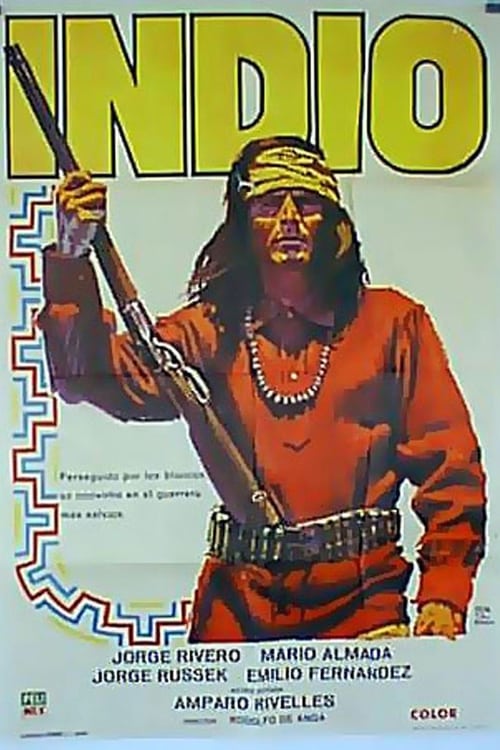
Indio
1972
No user ratings available yet
Representation score: 3.9 out of 10

Representation Score
Fair
1978
Director
Claus Dobberke
Runtime
82 minutes
Average Rating
No ratings yetNew Showbiz Analysis
Severino offers a compelling twist on the Western genre by shifting the focus from expansion to systemic displacement. By centering the Manzeneros tribe, the film provides a strong critique of colonialist land acquisition and predatory corporate interests. However, the narrative appears heavily focused on male-dominated dynamics. The absence of visible female roles or LGBTQ+ representation limits the film's depth in reflecting diverse identities despite its strong ethnic and cultural themes. Ultimately, the film succeeds as a social critique of capitalism and colonialism, even if its character demographics remain narrow.
Category Breakdown
The film does not include any explicit LGBTQ+ characters or non-cisgender identities. The story focuses on tribal kinship and land-based conflicts.
The dynamics are mainly centered around male relationships, involving Severino, his brother, and his late father. There is no evidence of women having significant roles in driving the story.
The story centers on the Manzeneros community in the Argentinian Andes. It challenges Western clichés by presenting the frontier as a site where indigenous populations face systemic oppression.
The film critiques traditional economic expansion by pitting a corrupt sheep breeding company against local settlers and indigenous groups. It emphasizes communal struggle over individualist morality.
There is no indication of characters with visible or invisible disabilities within the narrative.
Present on Screen
Limited or Absent
Official Synopsis
After a ten-year absence, Severino returns to his tribe, the Manzeneros, who live on the edge of the Argentinian Andes. The reason for his visit is to take his younger brother back with him up north. However, in his home village, Severino finds a tense and troubled situation. His father Raymundo has recently been found dead. He was on the tracks of a gang of white bandits who had stolen cattle from both Indians and settlers. A sheep breeding company is behind these criminal machinations. This company seeks to drive the Indians and settlers off the fertile land so that they can purchase it cheaply.
1972

1964
1970
1972

2014
1963
1976

1960
No reviews yet. Be the first to share your thoughts on this movie!
Use the rating form above to leave a star rating and optional review.