Jubal
1956
No user ratings available yet
Representation score: 1.8 out of 10
Representation Score
Minimal
1958
PGDirector
Michael Curtiz
Runtime
103 minutes
Average Rating
No ratings yetNew Showbiz Analysis
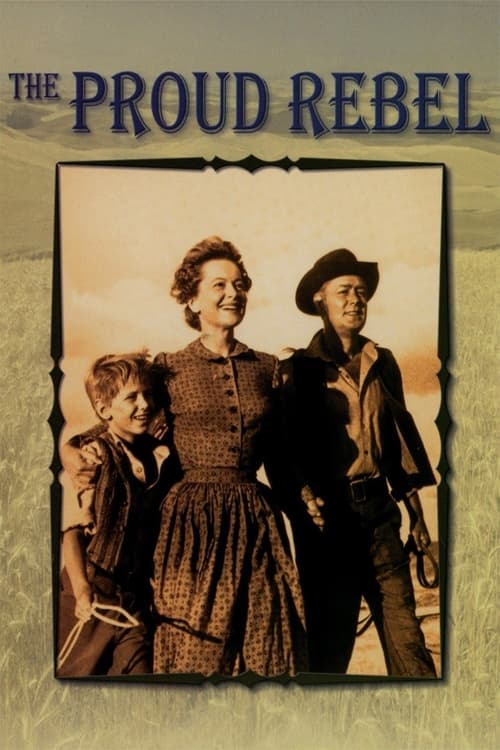
The Proud Rebel is a quintessential mid-century Western that prioritizes traditional social structures and patriarchal hierarchies. The narrative focuses on a veteran's personal redemption and the restoration of his family unit, adhering to the established studio system conventions of the era. While the film introduces a psychological element through a child's selective mutism, it uses this disability primarily as a dramatic cliché to drive the plot. The character's condition serves the protagonist's emotional arc rather than offering a nuanced look at disability itself. Ultimately, the film reinforces 1950s cultural norms. It lacks racial and ethnic diversity, presenting a predominantly white and homogeneous cast. It also lacks LGBTQ+ representation, focusing on traditional masculine archetypes and moral resolutions.
Category Breakdown
The film follows a strictly heterosexual and cisgender-focused structure. It centers on the bond between a father and son without depicting any non-traditional gender identities.
Gender roles are reinforced through masculine archetypes. A woman provides financial support to the protagonist, but her role remains within a traditional framework of assistance.
The cast is predominantly white, reflecting the historical homogeneity of 1950s Westerns. The narrative lacks non-Anglo-Saxon characters or diverse ethnic representation.
The story emphasizes traditional Western values like redemption and family restoration. It operates within a conventional moral framework that upholds community standards.
A child's selective mutism serves as a central plot device. This psychological condition acts as a catalyst for the protagonist's journey rather than exploring neurodivergence independently.
Present on Screen
Limited or Absent
Official Synopsis
Searching for a doctor who can help him get his son to speak again--the boy hadn't uttered a word since he saw his mother die in the fire that burned down the family home--a Confederate veteran finds himself facing a 30-day jail sentence when he's unfairly accused of starting a brawl in a small town. A local woman pays his fine, providing that he works it off on her ranch. He soon finds himself involved in the woman's struggle to keep her ranch from a local landowner who wants it--and whose sons were responsible for the man being framed for the fight.
1956
1940
1966
1959
1950

1959
1945
1966
No reviews yet. Be the first to share your thoughts on this movie!
Use the rating form above to leave a star rating and optional review.