Sunday Lovers
1980
No user ratings available yet
Representation score: 4.6 out of 10
Representation Score
Limited
1976
Director
Luigi Comencini, Nanni Loy, Luigi Magni
Runtime
112 minutes
Average Rating
No ratings yetNew Showbiz Analysis
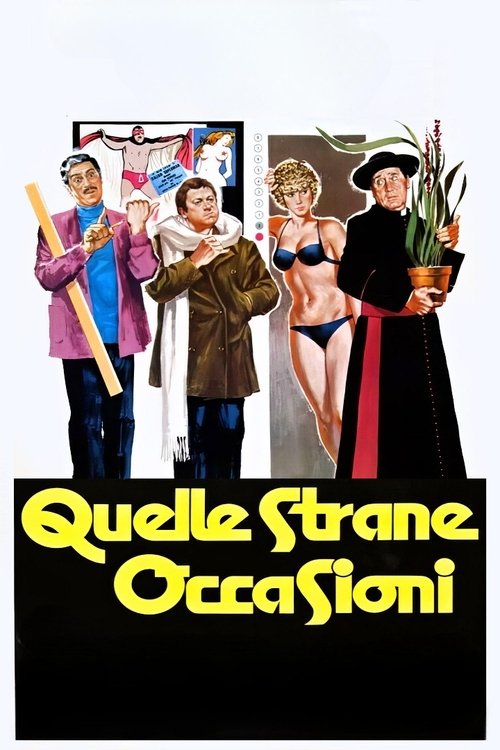
Strange Occasion is a product of its specific cinematic era and regional industry. The anthology format, consisting of three comedic episodes, prioritizes episodic entertainment over challenging social norms. The film aligns with mid-70s conventional comedic clichés, particularly regarding gender and racial representation. It lacks documentation of multi-layered representation or progressive inclusion. Ultimately, the work functions as a localized Mediterranean comedy rather than a vehicle for social or systemic critique.
Category Breakdown
The film does not include any clear representation of LGBTQ+ identities or narratives that question the assumption that everyone is straight or cisgender. It follows traditional romantic storylines typical of the time.
The film includes episodes that seem to rely on the 'commedia sexy all'italiana' tradition, positioning female characters primarily as objects of desire rather than active participants in the plot.
The cast is expected to be predominantly made up of people from similar backgrounds, reflecting the production context of 1970s Italy. There is no evidence of non-white protagonists or diverse casting.
The film adheres to traditional European comedic structures, focusing on interpersonal romance and humor rather than critiquing broader societal norms.
There is no evidence of characters with visible or invisible disabilities playing central roles or driving the narrative.
Present on Screen
Limited or Absent
Official Synopsis
Three sexy and comic episodes.
1980
1962
1965
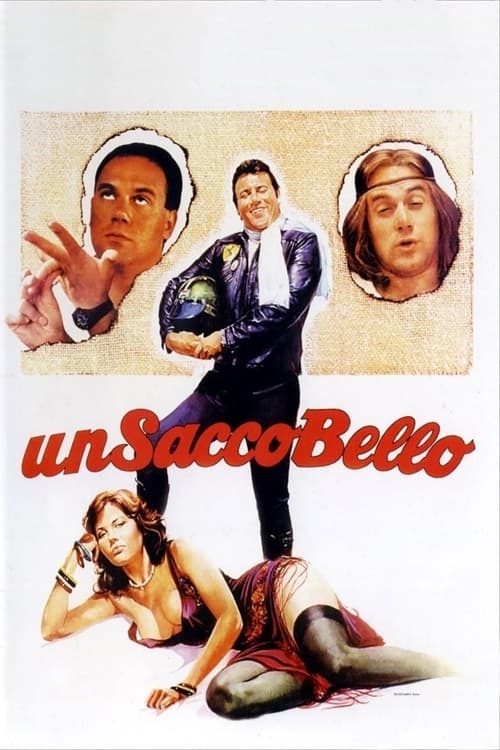
1980
1976
1965
1988
1953
No reviews yet. Be the first to share your thoughts on this movie!
Use the rating form above to leave a star rating and optional review.