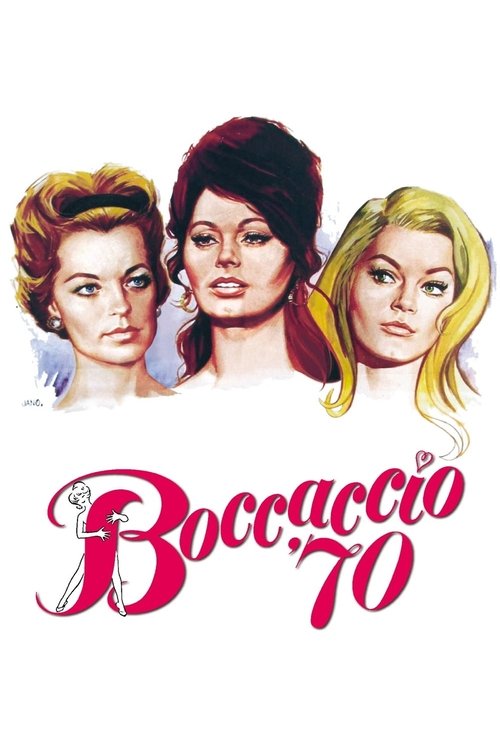
Boccaccio '70
1962
No user ratings available yet
Representation score: 7.5 out of 10
Representation Score
Limited
1965
Not RatedDirector
Franco Rossi, Mauro Bolognini, Luigi Comencini, Dino Risi
Runtime
107 minutes
Average Rating
No ratings yetNew Showbiz Analysis
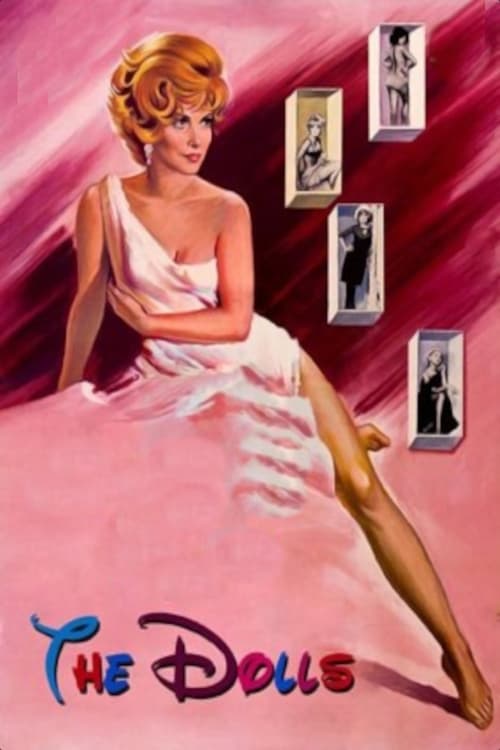
The Dolls is made up of four separate stories that serve as a social commentary on post-war Italy. Its fragmented structure allows for diverse vignettes of romantic and social interactions, using satire to explore societal norms. However, the film's critique is limited by the era's cinematic standards. It does not feature racial diversity or provide explicit representation of LGBTQ+ identities or characters with disabilities, reflecting the homogeneous social focus of 1960s Italian cinema.
Category Breakdown
The film follows the conventions of 1960s Italian romantic comedies and does not explicitly depict non-straight or non-cisgender identities. It also does not challenge the assumption that everyone is straight or cisgender.
Female characters play key roles in creating comedic tension within the sex comedy genre. The film explores changing social norms, but it is unclear whether it challenges or reinforces traditional gender hierarchies.
The film portrays a homogeneous Mediterranean society typical of 1960s Italian cinema. There is no indication of significant racial diversity or non-white actors in these scenes.
Segments such as 'Monsignor Cupid' highlight the tension between secular modernity and religious institutions. The film critiques social hypocrisy and institutional authority through these themes.
There is no information about characters with physical or neurodivergent disabilities in the film.
Present on Screen
Limited or Absent
Official Synopsis
This semi-amusing sex (romance) comedy has four separate stories: "The Telephone Call", written by Rodolfo Sonego, directed by Dino Risi. "A Treatise on Eugenics", written by Tullio Pinelli from a story by Luciano Salce and Steno, directed by Luigi Comencini. "The Soup", written by Rodolfo Sonego and Luigi Magni, directed by Franco Rossi. "Monsignor Cupid", written by Leo Benvenuti and Piero de Bernardi from a story by Boccaccio, directed by Mauro Bolognini.
1962
1963
1954
1964
1974
1985
1991
1981
No reviews yet. Be the first to share your thoughts on this movie!
Use the rating form above to leave a star rating and optional review.