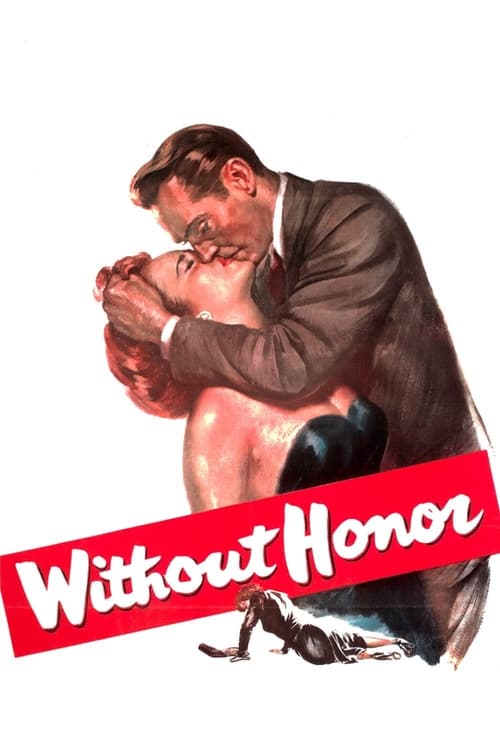
Without Honor
1949
No user ratings available yet
Representation score: 0.4 out of 10
Representation Score
Limited
1949
Director
Willy Rozier
Runtime
88 minutes
Average Rating
No ratings yetNew Showbiz Analysis
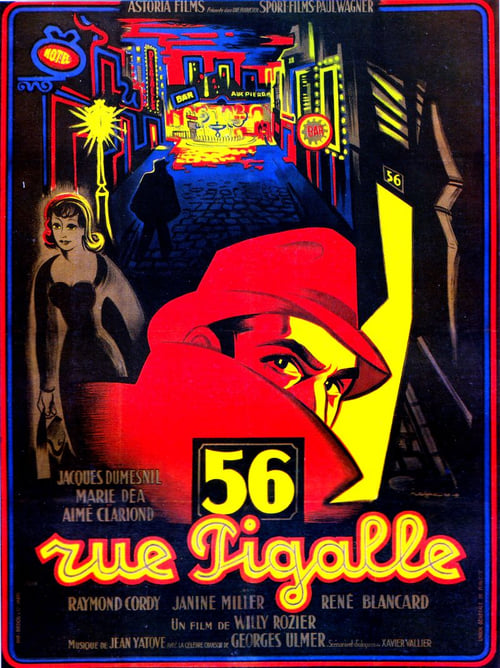
56, rue Pigalle is a conventional mid-century crime drama that adheres to the social and narrative norms of 1949. The plot centers on romantic scandals and individual moral failings within a strictly heterosexual framework. The film lacks complexity in its portrayal of diverse identities, relying on established gender stereotypes and colonial-era settings. While it explores themes of blackmail and ethics, it does not aim to challenge the era's typical cinematic norms. Ultimately, the production functions as a period-typical drama, prioritizing traditional character roles and social structures over diverse or progressive representation.
Category Breakdown
The film focuses on infidelity and marital issues within a heterosexual context. There are no non-binary or LGBTQ+ identities or intimate relationships between same-sex partners.
The story relies on traditional gender stereotypes, such as the unfaithful wife and the wronged husband. Female characters primarily serve as plot catalysts rather than having independent roles.
The narrative moves to the Congo but this seems to reflect a colonial-era perspective rather than an integrated cast. The focus remains on a predominantly white European ensemble.
The film explores moral complexity through themes of blackmail and scandal, following a standard crime-drama trajectory without challenging Western institutions or promoting secularism.
There are no visible or invisible disabilities mentioned or central to the character arcs.
Present on Screen
Limited or Absent
Official Synopsis
Lucien Bonnet, Jean Vigneron's manservant, blackmails his boss, who is having an affair with Inès de Montalban, married to Ricardo. Vigneron pays the sum but Lucien is killed by an accomplice, Baruch. Everything seems to accuse Jean who, for fear of compromising Inès, prefers to keep mum. Fortunately, his innocence will be proved thanks to a surprise witness. The two lovers flee to Congo while the husband soon forgets them, finding comfort in debauchery.
1949

1952
1949
1937
1951
1946
1953
1947
No reviews yet. Be the first to share your thoughts on this movie!
Use the rating form above to leave a star rating and optional review.