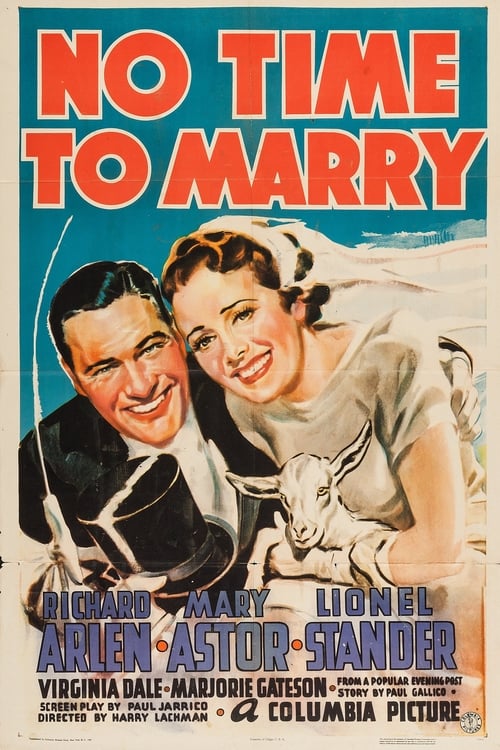
No Time to Marry
1938
No user ratings available yet
Diversity score: 2.2 out of 10
No Poster Available
1926
PassedDirector
William Watson
Runtime
19 minutes
Average Rating
No ratings yetSynopsis
The city editor refuses to give Anne a reporter's job. Two photographers have failed to get a picture of Senator Hangnail, and Anne is promised a job if she succeeds. She gets into the senator's house and is suspected of being a mafia black-hand terrorist. Escaping that, she manages to snap several pictures but, when they are developed, she has photographed everything by the senator's face. The senator has hired a couple of bodyguards to protect him the the 'black-hand' woman, and takes them to eat at a café. She poses as a waitress and gets the picture. She is offered the job but her boyfriend, Jimmie, says he will have to get another girl to be his wife, and she turns down the job.
Overall Score
Limited
Category Breakdown
LGBTQ+ Representation
The film lacks any evidence of non-heteronormative identities or same-sex intimacy. The plot centers on a traditional romantic dynamic between Anne and Jimmie.
Gender Representation
Anne demonstrates significant agency and wit while navigating a male-dominated industry. However, the story ultimately reinforces traditional hierarchies when she rejects her career for domestic stability.
Racial & Ethnic Diversity
The narrative appears to follow the homogeneous casting norms of the 1920s. There is no mention of non-Anglo-Saxon characters or a diverse cast.
Religious & Cultural Diversity
The film adheres to traditional Western values and social order. It focuses on period-specific anxieties regarding organized crime rather than systemic critiques.
Disability Representation
There is no information available regarding the inclusion of characters with physical or neurodivergent disabilities.
Strengths
Areas for Improvement
AI Analysis
Hold Still presents a complex look at early 20th-century gender roles. While the protagonist displays impressive professional resourcefulness and intellect, the narrative arc concludes by prioritizing marriage over career advancement. The film is a product of its era, reflecting the homogeneous social structures and Western values typical of 1926. It lacks meaningful representation of diverse racial, ethnic, or LGBTQ+ identities. Ultimately, the film functions as a period piece that showcases female competence only to eventually fold it back into a traditional domestic framework.
1938
1934
1931
1944
1929
1937
1930

1936
1924

1927
1943
1947
No reviews yet. Be the first to share your thoughts on this movie!
Use the rating form above to leave a star rating and optional review.