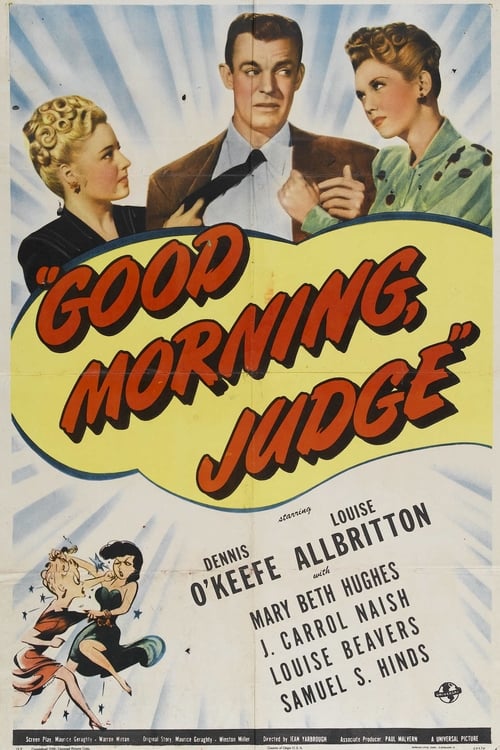
Good Morning, Judge
1943
No user ratings available yet
Representation score: 2.0 out of 10

Representation Score
Minimal
1936
ApprovedDirector
Reginald Le Borg
Runtime
19 minutes
Average Rating
No ratings yetNew Showbiz Analysis
A Girl's Best Years functions as a standard mid-1930s studio comedy, largely defined by the era's restrictive social and cinematic conventions. While the female protagonist offers a slight departure from purely domestic roles through her career as a reporter, the core conflict remains rooted in traditional romantic and legal frameworks. The film lacks visible diversity, showing no evidence of racial, LGBTQ+, or disability diversity. It appears to be a product of its time, prioritizing social stability and traditional structures over any meaningful subversion of the status quo.
Category Breakdown
The film does not include any LGBTQ+ identities or same-sex relationships. It follows the strict heterosexual standards typical of the 1936 Hays Code era.
A female reporter provides a sense of professional independence beyond domestic roles. However, the plot remains focused on romantic and marital legalities, reinforcing traditional social structures.
There is no indication of a diverse cast or non-Anglo-Saxon characters. The production appears to follow the homogeneous casting standards of the 1930s.
The narrative focuses on social decorum and the sanctity of romantic contracts. It emphasizes traditional social institutions rather than challenging Western norms.
The film contains no mention of characters navigating physical, sensory, or neurodivergent experiences.
Present on Screen
Limited or Absent
Official Synopsis
A woman reporter is hired by an author-songwriter to help him avoid additional breach-of-promise suits.
1943
1934
1937
1939
1934
1938
1938
1940
No reviews yet. Be the first to share your thoughts on this movie!
Use the rating form above to leave a star rating and optional review.