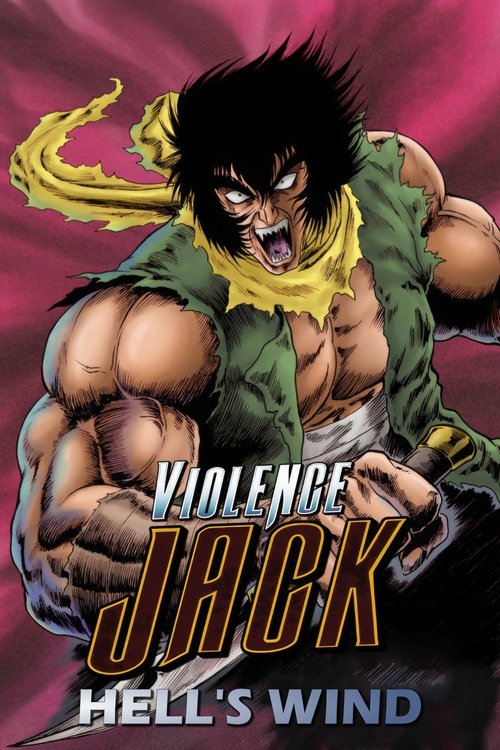
Violence Jack: Hell's Wind
1990
No user ratings available yet
Representation score: 4.8 out of 10

Representation Score
Fair
1986
UNRATEDDirector
Osamu Kamijo
Runtime
37 minutes
Average Rating
No ratings yetNew Showbiz Analysis
Violence Jack: Harem Bomber is a nihilistic exploration of a world where traditional social hierarchies have vanished. It successfully deconstructs Western institutions such as law, family, and organized religion, presenting a landscape of moral relativism. However, this deconstruction comes at the expense of meaningful representation. The film relies on extreme gendered power imbalances and uses physical trauma as a tool for horror. It lacks any representation of LGBTQ+ identities or intentional racial diversity. Ultimately, the work is defined by its disruption of social order rather than its inclusion of diverse voices.
Category Breakdown
The film centers on survival and factional conflict without depicting any non-binary or LGBTQ+ identities. It adheres to the era's straight and cisgender norms, lacking any representation of diverse sexual orientations or gender identities.
Female characters frequently serve as victims or tools in the conflict. The story emphasizes physical dominance rather than empowering women or challenging traditional gender roles.
The setting is a generic wasteland reflecting a collapsed society. There is no indication of intentional casting to represent diverse racial backgrounds or cultures.
The film portrays a world where capitalism, religion, and the state have failed entirely. This depiction highlights a moral relativism where traditional social contracts no longer hold.
Physical trauma and mutilation are used as plot devices to enhance the horror of the setting. These elements do not explore the lived experiences of disability or neurodivergence.
Present on Screen
Limited or Absent
Official Synopsis
Lovers separated during the apocalypse are swept up in a vicious grudge match between the Slum King, ruler of the wasteland, and the immortal warrior Violence Jack.
1990
1992
1988

1973
1993
1968
1996

1996
No reviews yet. Be the first to share your thoughts on this movie!
Use the rating form above to leave a star rating and optional review.