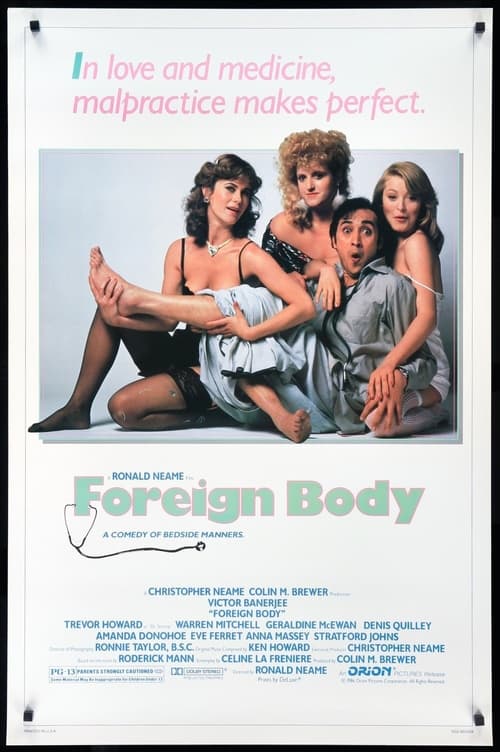
Foreign Body
1986
No user ratings available yet
Representation score: 4.3 out of 10

Representation Score
Fair
1969
GDirector
James Ivory
Runtime
112 minutes
Average Rating
No ratings yetNew Showbiz Analysis
James Ivory's direction allows for a meaningful exploration of cultural intersections. By placing the narrative around a Western pop star learning from an Indian master, the film challenges the typical Western perspective of the 1960s. The film effectively critiques Western institutional norms and elevates Eastern spiritual authority. It leverages the counterculture movement to question entrenched, traditional social structures. However, the film's scope is limited when it comes to identity politics. It provides little representation for LGBTQ+ individuals or characters with disabilities, focusing instead on the clash of cultural philosophies.
Category Breakdown
The film does not include explicit LGBTQ+ characters or storylines. Instead, it focuses on the conflict between Western pop culture and Eastern traditions.
Women are shown in changing social environments but are not portrayed as agents of change. The film examines social disruption without dismantling masculine authority.
The story shifts away from Anglo-centric norms by focusing on a journey to Bombay. It highlights Indian expertise as a key factor in the protagonist's development.
The film delves into the tension between capitalist systems and communal beliefs. It presents alternative spirituality as a legitimate alternative to established Western institutions.
There is no significant depiction of physical or neurodivergent disabilities in this work.
Present on Screen
Limited or Absent
Official Synopsis
Britain's top pop artiste, Tom Pickle, travels to Bombay, India, circa 1960s to learn to play the sitar from renowned maestro Ustad Zafar Khan.
1986
1967
1995
1966

1966

1963
2001

1964
No reviews yet. Be the first to share your thoughts on this movie!
Use the rating form above to leave a star rating and optional review.