
The Strongman Who Became a Lamb
1968
No user ratings available yet
Representation score: 1.8 out of 10
Representation Score
Minimal
1967
Director
Alekos Sakellarios
Runtime
103 minutes
Average Rating
No ratings yetNew Showbiz Analysis
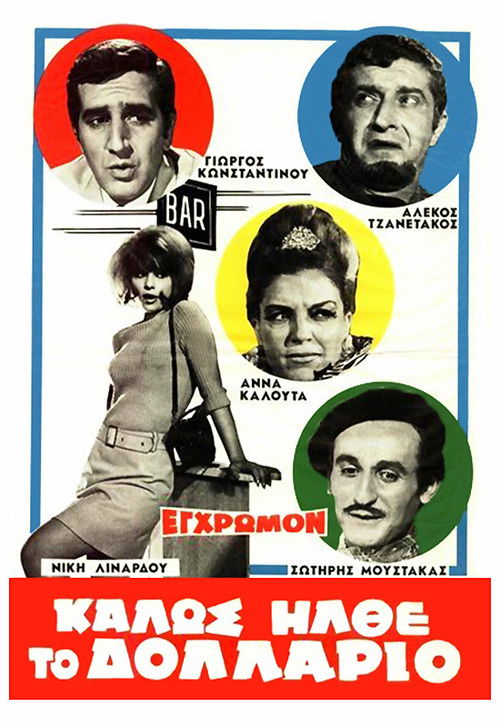
Welcome Dollar is a period-specific social comedy that operates within the conventional social frameworks of mid-century Mediterranean cinema. The narrative emphasizes domestic stability and the comedic navigation of class-based anxieties common to the era. While the film provides insight into the socioeconomic pressures of 1960s Greece, it does not employ progressive narrative techniques. Instead, it serves as a reflection of established social hierarchies rather than a means to challenge them.
Category Breakdown
The film centers on a traditional family structure and does not include any queer narratives or non-cisgender identities, following the straight-centered standards of 1960s Greek cinema.
Gender dynamics reflect a period-specific domestic hierarchy where the matriarch manages the household's limited resources, maintaining traditional roles without challenging them.
The production is a localized Greek comedy with a homogeneous cast reflecting the specific demographic realities of its time and place, without incorporating diverse backgrounds.
The story explores economic hardship and foreign investment through social comedy, emphasizing familial cohesion and traditional values over a critique of Western institutions.
There are no visible or invisible disabilities portrayed as central to the character arcs or the plot progression.
Present on Screen
Limited or Absent
Official Synopsis
Philip (Giorgos Constantinou), a shy and dignified accountant and English teacher, lives with his mother (Zoli Garbi) and his two siblings in the same house. His and his mother's meager income, just enough to support them all. His younger brother (Alekos Tzanetakos) remains unemployed and lazy rather out of conscience, while his older brother, Kimon (Orpheus Zachos), dreams of being re-elected prefect and refuses, although a qualified accountant, to work, considering the positions demeaning and irrelevant offered to him. His tragic financial situation will be further burdened by their imminent forced move to another house. It is also the first color Greek film, edited entirely in Greece. It is based on the play "The 6th American Fleet" by Alek Sakellarios and Christos Giannakopoulos, who also wrote the screenplay, while Sakellarios directed the film.
1968

1976

1966

1957
1970
1957

1967

1964
No reviews yet. Be the first to share your thoughts on this movie!
Use the rating form above to leave a star rating and optional review.