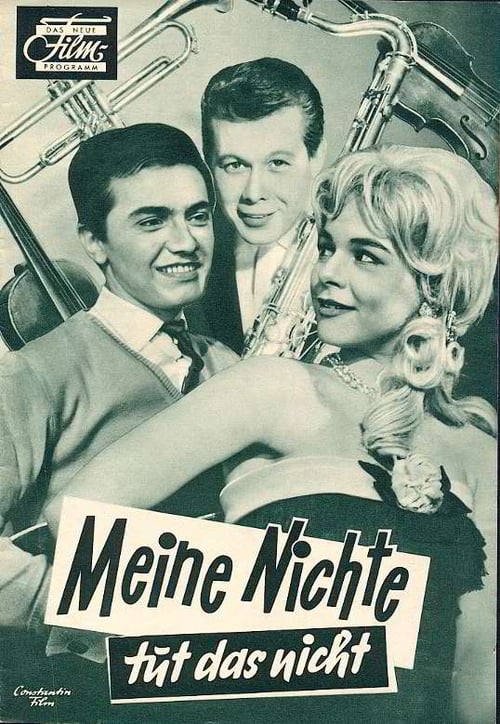
Meine Nichte tut das nicht
1960
No user ratings available yet
Representation score: 1.6 out of 10
Representation Score
Minimal
1964
TV-GDirector
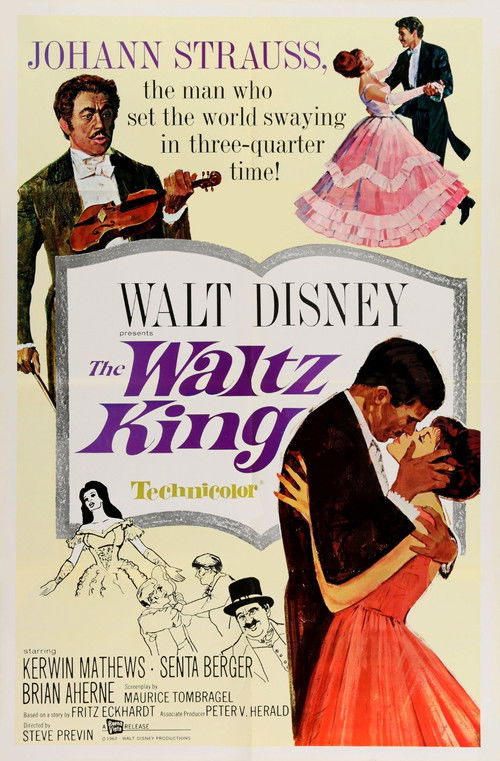
Steve Previn
Runtime
94 minutes
Average Rating
No ratings yetNew Showbiz Analysis
The Waltz King is a traditional biopic that emphasizes preserving historical and cultural norms. It celebrates classical Western achievements while reinforcing conventional social hierarchies and demographic compositions. The film's structure relies on the established social frameworks of the 19th century. By focusing on the Viennese musical aristocracy and patriarchal family dynamics, the narrative avoids challenging the status quo or introducing diverse perspectives. Ultimately, the production upholds a specific cultural heritage without questioning the social or gendered structures of the time.
Category Breakdown
The film follows typical 19th-century romance themes and does not include characters with non-straight identities or stories that challenge the idea that everyone is straight.
Female characters mainly provide emotional support for the main character. The film upholds traditional gender roles and does not show women in powerful intellectual or social positions.
Set in mid-19th-century Vienna, the story focuses on a homogeneous European society. It reinforces Western cultural norms without showing diverse ethnic backgrounds.
The movie highlights the classical Western musical tradition and the importance of the family unit. It portrays the artist's struggles within established social and patriarchal structures.
The film does not feature characters with visible or invisible disabilities. It concentrates solely on the musical accomplishments of the central figure.
Present on Screen
Limited or Absent
Official Synopsis
A look at the life of Johann Strauss, Jr., beginning when, as a boy, he earns his famous father’s displeasure when he tries his hand at composing. But he eventually proves to his father and the world that he is a fine musician.
1960
1971
1962
1954
1982

1942
1992
1952
No reviews yet. Be the first to share your thoughts on this movie!
Use the rating form above to leave a star rating and optional review.