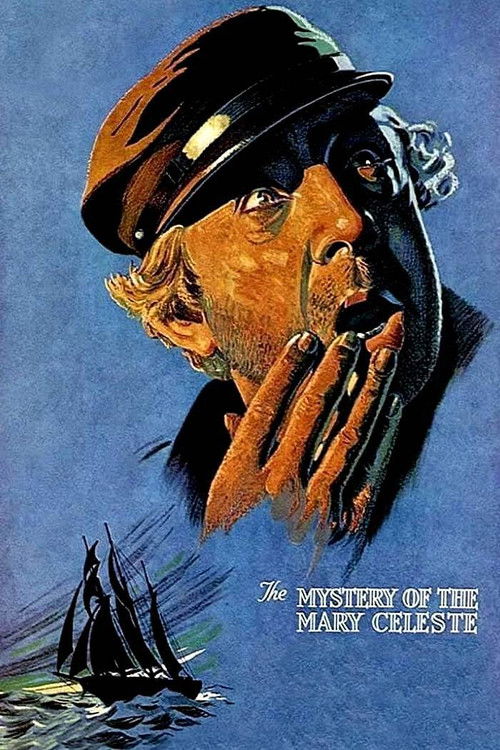
The Mystery of the Mary Celeste
1935
No user ratings available yet
Representation score: 1.8 out of 10
Representation Score
Minimal
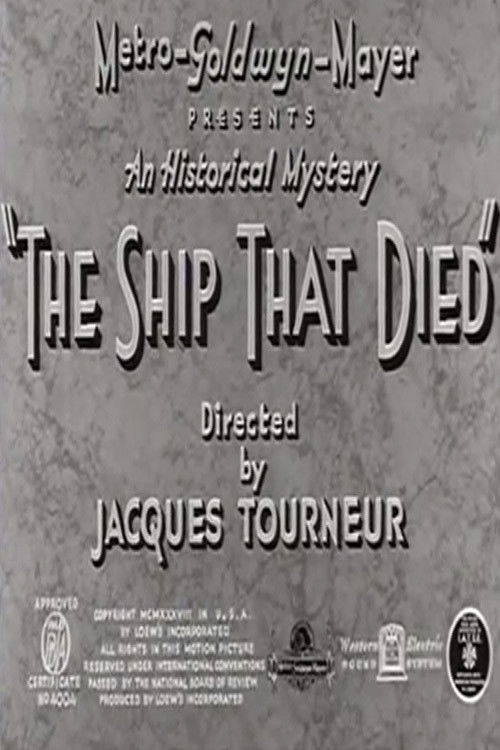
1938
ApprovedDirector
Jacques Tourneur
Runtime
10 minutes
Average Rating
No ratings yetNew Showbiz Analysis
Jacques Tourneur’s short is a period-accurate crime drama that prioritizes atmospheric tension over social diversity. The narrative structure is firmly rooted in the genre conventions of the late 1930s, focusing on the mystery of the Mary Celeste. Because the film centers on a male-dominated criminal underworld, it lacks characters who reflect more than one aspect of diversity. The characters and social framework reflect the era's standard demographic and gender hierarchies without attempting to challenge them. Ultimately, the film serves as a snapshot of historical studio filmmaking, where the focus remains on psychological tension and traditional storytelling rather than diverse representation.
Category Breakdown
The film does not include any LGBTQ+ characters or non-cisgender identities. It follows the straight-centered standards of the 1930s.
The story focuses on a male-dominated criminal syndicate, with female characters playing minor, supporting roles rather than driving the plot.
The production reflects the homogeneous demographics typical of 1930s filmmaking. The cast appears to follow standard Western-centric casting norms without any non-white representation.
The story operates within a traditional moral framework centered on criminality. It focuses on internal moral decay rather than critiquing systemic issues in Western society.
There is no evidence of characters with visible or invisible disabilities. The narrative does not use neurodivergent representation or disability as a plot device.
Present on Screen
Limited or Absent
Official Synopsis
This MGM An Historical Mystery short traces the final voyage of the Mary Celeste, a ship discovered at sea, in December 1872, devoid - for no discernible reason - of crew, passengers and captain. At "the famed nautical court of Gibraltar", investigators propose three hypotheses.
1935
2002
1929
1951

1992
1954
1943

2015
No reviews yet. Be the first to share your thoughts on this movie!
Use the rating form above to leave a star rating and optional review.