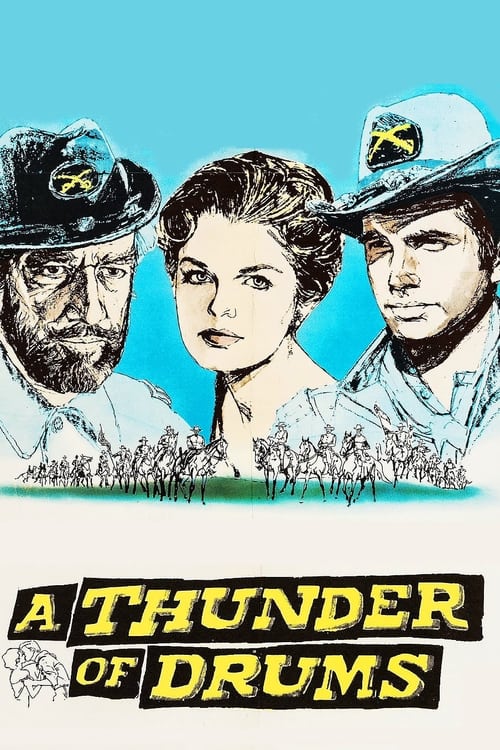
A Thunder of Drums
1961
No user ratings available yet
Diversity score: 1.8 out of 10

1952
NRDirector
Joseph M. Newman
Runtime
82 minutes
Average Rating
No ratings yetSynopsis
Duncan MacDonald, a 19th-century Royal Canadian Mountie, has to escort a group of Cree Indians back to their above-the-border reservation. His guide in this endeavor is the not-too-trustworthy half-breed Natayo.
Overall Score
Limited
Category Breakdown
LGBTQ+ Representation
The film contains no depiction of non-heteronormative identities or same-sex intimacy. It adheres strictly to the gendered social structures of the 1950s.
Gender Representation
The narrative is driven by a male protagonist whose leadership is central to the plot. Female characters occupy secondary roles that do not challenge masculine dominance.
Racial & Ethnic Diversity
The film includes Cree characters and a mixed-heritage guide. While casting includes Native American actors, the story remains tethered to colonial frontier tropes.
Religious & Cultural Diversity
The story emphasizes frontier justice and the authority of the Royal Canadian Mounted Police. It reinforces the legitimacy of institutional presence in the West.
Disability Representation
There is no discernible focus on visible or invisible disabilities. No characters have arcs defined by neurodivergence or physical impairment.
Strengths
Areas for Improvement
AI Analysis
Pony Soldier functions as a standard mid-century Western that reinforces existing social and institutional hierarchies. The narrative architecture prioritizes masculine leadership and colonial-era authority structures. While the inclusion of Indigenous characters and a mixed-heritage guide provides some ethnic presence, the film lacks the intersectional complexity needed to disrupt genre expectations. It remains a product of its temporal context. Ultimately, the film serves as a representative example of mainstream 1950s cinema, characterized by a strict adherence to traditional social norms and established power dynamics.
1961
1973
1948
1946

1953
1942
1957
1929
1957
1950
1953
1954
No reviews yet. Be the first to share your thoughts on this movie!
Use the rating form above to leave a star rating and optional review.