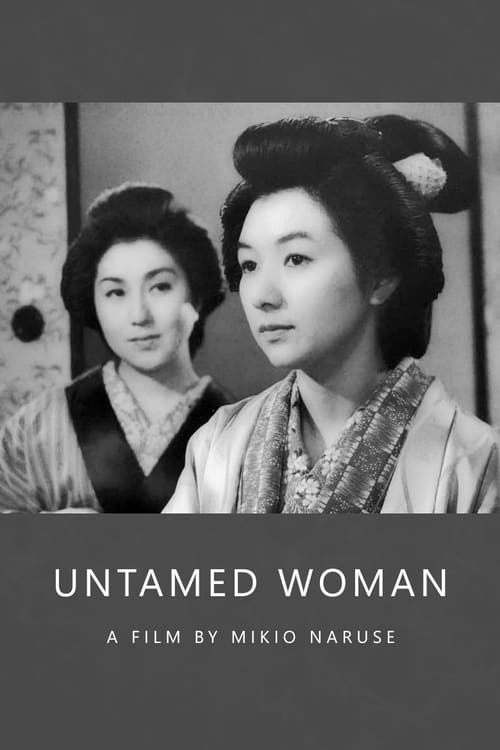
Untamed Woman
1957
No user ratings available yet
Diversity score: 5.0 out of 10

1950
Director
Mikio Naruse
Runtime
97 minutes
Average Rating
No ratings yetSynopsis
The critical establishment was clearly not prepared to accept a woman's prison film featuring former prostitutes recovering from venereal diseases, unwanted pregnancies, and estranged lovers. With its cat fights, hysterical tantrums, film noir lighting, and dramatic music, White Beast is indicative of the new influences of the Hollywood psychological thriller on Naruse. Caged (John Cromwell, 1950) initiated a cycle of women's prison movies in the United States that may or may not have been shown in Japan, but the stylistics of White Beast draw on the same paranoid woman's films and film noir conventions that preceded the American cycle.
Overall Score
Good
Category Breakdown
LGBTQ+ Representation
The film explores social dynamics within a female rehabilitation facility. While the setting allows for female-centric intimacy, there is no explicit evidence of queer identities or critiques of heteronormativity.
Gender Representation
The story centers on Keiko Yukawa, a woman navigating reintegration after prostitution. This focus on female resilience disrupts traditional patriarchal hierarchies by placing female experience at the narrative center.
Racial & Ethnic Diversity
The production is ethnically homogeneous, reflecting its 1950s Japanese origin. It avoids Western-centric norms but lacks the intersectional racial blending found in more diverse modern works.
Religious & Cultural Diversity
The narrative critiques traditional moralistic structures through the lens of social stigma. It examines how institutionalized morality often fails marginalized individuals attempting to reintegrate into society.
Disability Representation
There is no evidence within the narrative regarding the portrayal of physical or neurodivergent disabilities.
Strengths
Areas for Improvement
AI Analysis
Mikio Naruse’s direction provides a sophisticated look at female agency within restrictive social structures. By centering on a woman navigating the aftermath of prostitution, the film subverts the male-dominated cinematic norms of the 1950s. The film excels at exploring social marginalization and the systemic challenges faced by women. It uses a specific cultural setting to critique institutionalized morality and the stigma attached to social reintegration. However, the film remains ethnically homogeneous and lacks explicit LGBTQ+ representation. While the female-centric setting offers potential for nuanced social exploration, the narrative does not provide clear evidence of queer identities.
1957
1954
1975

1961
1966
1962
1971

1959

1992
1982

1943

1978
No reviews yet. Be the first to share your thoughts on this movie!
Use the rating form above to leave a star rating and optional review.