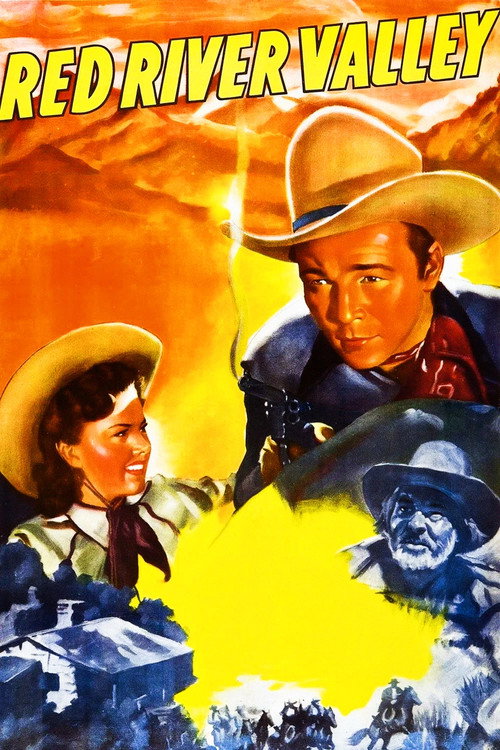
Red River Valley
1941
No user ratings available yet
Representation score: 0.3 out of 10
Representation Score
Minimal
1945
NRDirector
Joseph Kane
Runtime
82 minutes
Average Rating
No ratings yetNew Showbiz Analysis
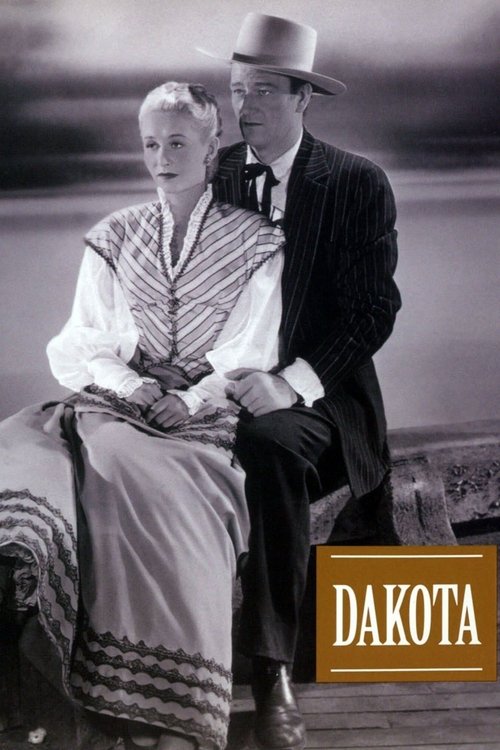
Dakota is a conventional mid-century Western that relies heavily on established genre clichés. Although it introduces slight variations through an immigrant character and a financially ambitious female lead, it does not challenge the era's social hierarchies. The film's exploration of corporate corruption offers some thematic depth, but the narrative remains tied to traditional clichés, prioritizing individual struggle over systemic critique.
Category Breakdown
The film does not include any characters with non-straight or non-cisgender identities, and there is no depiction of same-sex relationships. The central romantic plot revolves around a traditional heterosexual marriage.
Sandy Poli actively influences the story through her financial planning. However, the narrative remains focused on male characters and Sandy's connections to her father and husband.
Marko Poli, an immigrant tycoon, brings socioeconomic complexity to the story. However, Native Americans are portrayed as scapegoats for the villains' crimes, following typical Western stereotypes.
The story critiques capitalist corruption and the expansion of railroads. While it delves into institutional greed, it adheres to a traditional Western moral framework emphasizing individual justice.
There are no characters with visible or invisible disabilities in the narrative.
Present on Screen
Limited or Absent
Official Synopsis
In 1871, professional gambler John Devlin elopes with Sandra "Sandy" Poli, daughter of Marko Poli, an immigrant who has risen to railroad tycoon. Sandy, knowing that the railroad is to be extended into Dakota, plans to use their $20,000 nest egg to buy land options to sell to the railroad at a profit. On the stage trip to Ft. Abercrombie, their fellow passengers are Jim Bender and Bigtree Collins, who practically own the town of Fargo and Devlin is aware that they are prepared to protect the little empire... trying to drive out the farmers by burning their property, destroying their wheat, and blaming the devastation on the Indians. Continuing their journey north on the river aboard the "River Bird', Sandy and John meet Captain Bounce, an irascible old seafarer. Two of Bendender's henchmen, Slagin and Carp, board the boat and relieve John of his $20,000 at gunpoint. Captain Bounce, chasing the robber's dinghy..
1941
1969
1953

1939
1950

1957
1941
1972
No reviews yet. Be the first to share your thoughts on this movie!
Use the rating form above to leave a star rating and optional review.