Marshal of Cedar Rock
1953
No user ratings available yet
Representation score: 1.3 out of 10
Representation Score
Minimal
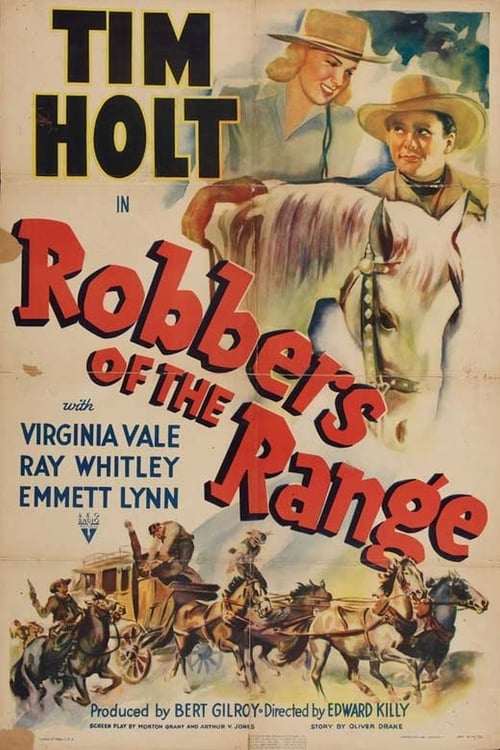
1941
ApprovedDirector
Edward Killy
Runtime
61 minutes
Average Rating
No ratings yetNew Showbiz Analysis
Robbers of the Range is a conventional Western that functions as a product of its time. The narrative focuses on a struggle between a landowner and railroad agents, a cliché that emphasizes traditional masculine power and property rights. The film lacks intentionality regarding diverse representation. It maintains the social and cinematic hierarchies prevalent in 1941, offering little disruption to established genre formulas or varied perspectives. Ultimately, the film serves as a standard genre piece that reflects the expansionist and straight-centered values of mid-century American cinema.
Category Breakdown
The film adheres to the straight-centered social structures common in 1941 cinema. There is no evidence of same-sex intimacy or non-binary gender identities.
The story centers on a conflict between railroad agents and a landowner. This framework prioritizes masculine control and traditional leadership roles typical of the era.
The narrative likely reflects the homogeneous casting norms of the early 1940s. It centers on Western expansionist perspectives without evidence of challenging racial hierarchies.
The plot explores the tension between individual property rights and corporate encroachment. It follows a standard moral framework common to the period's conflict-resolution arcs.
There is no documented evidence regarding the inclusion of characters with visible or invisible disabilities.
Present on Screen
Limited or Absent
Official Synopsis
Railroad agents frame a landowner who wont sell out to them.
1953

1939
1937
1949
1935
1942
1946
1942
No reviews yet. Be the first to share your thoughts on this movie!
Use the rating form above to leave a star rating and optional review.