Keeping the Kibbutz
2010
No user ratings available yet
Representation score: 5.3 out of 10
Representation Score
Excellent
2012
Director
Anna Moiseenko
Runtime
56 minutes
Average Rating
No ratings yetNew Showbiz Analysis
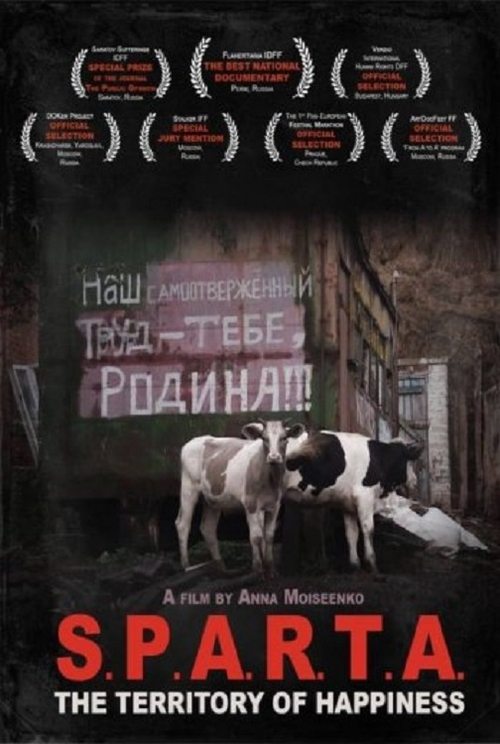
S.P.A.R.T.A. – The Territory Of Happiness serves as a cinematic study of alternative social architectures. Its primary value lies in its cultural critique, centering a narrative on a commune that actively resists contemporary capitalist norms. The film disrupts conventional expectations of social and economic progress by deconstructing Western institutional values. It favors a collective, localized identity that challenges the standard trajectory of post-Soviet development. While the work lacks explicit markers of diversity like LGBTQ+ or disability representation, its fundamental rejection of mainstream systemic structures provides a progressive narrative profile.
Category Breakdown
The documentary does not provide any direct information about the sexual orientation or gender identity of the commune members. Therefore, this section remains neutral due to a lack of on-screen representation of non-straight relationships.
The film examines a communal structure that aims to avoid traditional social hierarchies. By rejecting standard societal structures, it potentially challenges patriarchal leadership models.
Set in a specific Ukrainian rural context, the demographic seems likely to be homogeneous. However, the focus on a localized, non-Western-centric model provides a departure from mainstream globalized narratives.
The narrative challenges Western capitalist dominance by documenting a group that rejects mainstream economic systems. It portrays the commune as a response to the collapse of communist utopia.
There is no documented evidence regarding the inclusion of individuals with physical or neurodivergent disabilities. The film's focus remains on the communal living experiment.
Present on Screen
Limited or Absent
Official Synopsis
SPARTA is the Agricultural Poetized Association for the Development of Labor Activity. This is how the commune calls itself, which has been engaged in the development of the "Theory of Happiness" in the Ukrainian village "Karavan" for more than 20 years. Unable to reconcile with the collapse of communist utopia, the "Spartans" created their own.
2010
2000

2005
2015

1977

2009
2006

2016
No reviews yet. Be the first to share your thoughts on this movie!
Use the rating form above to leave a star rating and optional review.