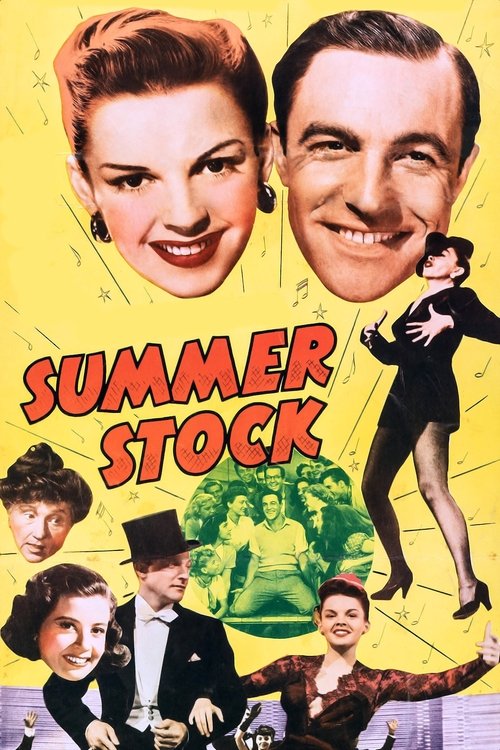
Summer Stock
1950
No user ratings available yet
Diversity score: 1.4 out of 10

1953
NRDirector
Charles Walters
Runtime
82 minutes
Average Rating
No ratings yetSynopsis
Members of a circus troupe "adopt" Lili Daurier when she finds herself stranded in a strange town. The magician who first comes to her rescue already has romantic entanglements and thinks of her as a little girl. Who can she turn to but the puppets, singing to them her troubles, forgetting that there are puppeteers? A crowd gathers around Lili as she sings. The circus has a new act. She now has a job. Will she get her heart's desire?
Overall Score
Minimal
Category Breakdown
LGBTQ+ Representation
The film operates within a strictly heteronormative framework. There is no evidence of non-cisnormative gender identities or same-sex romantic dynamics.
Gender Representation
Lili displays notable emotional agency and psychological fortitude while navigating war trauma. However, the narrative remains tethered to a romantic central arc and traditional gendered expectations.
Racial & Ethnic Diversity
The production features a homogeneous European cast reflecting its WWI-era French setting. There is a lack of racial or ethnic diversity in the primary cast.
Religious & Cultural Diversity
The film emphasizes romantic idealism and individual emotional truth. It adheres to traditional Western storytelling values and a conventional moral framework typical of 1950s Hollywood.
Disability Representation
The narrative does not feature characters with visible or invisible disabilities. It does not engage with neurodivergence or physical impairment as part of its thematic structure.
Strengths
Areas for Improvement
AI Analysis
Lili is a mid-century studio-era melodrama that prioritizes emotional resonance over the disruption of social hierarchies. While the protagonist shows significant resilience, the film's architecture remains rooted in conventional 1950s social structures. The narrative lacks intersectional complexity, focusing instead on a traditional romantic reconciliation. The casting and themes reflect the historical and geographic context of WWI-era France without challenging period norms. Ultimately, the film functions as a standard romantic narrative that reinforces rather than disrupts the social norms of its time.
No reviews yet. Be the first to share your thoughts on this movie!
Use the rating form above to leave a star rating and optional review.