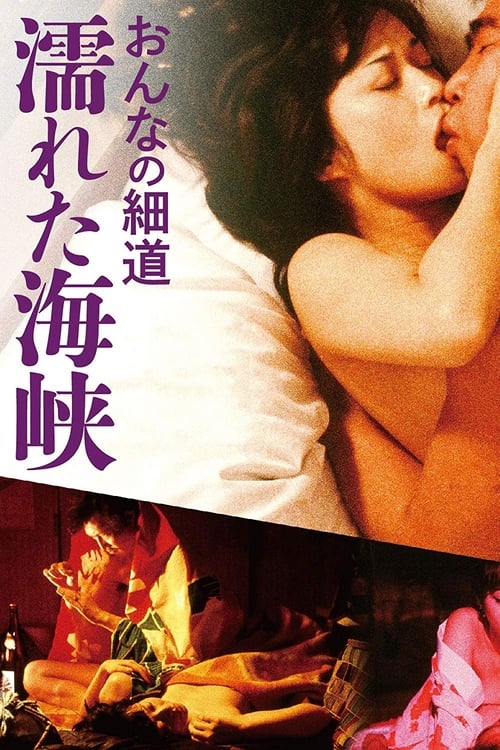
Woman's Trail: Wet Path
1980
No user ratings available yet
Representation score: 5.4 out of 10

Representation Score
Fair
1999
Director
Rokurō Mochizuki
Runtime
114 minutes
Average Rating
No ratings yetNew Showbiz Analysis
Minazuki is a character-driven film that emphasizes existential themes over broad demographic representation. It excels in deconstructing social norms and traditional family structures through its focus on unconventional relationships and underrepresented figures. Despite challenging traditional gender roles, the narrative remains centered on the male protagonist’s journey, which limits the exploration of diverse identities. The homogeneous cast further restricts the film’s multi-layered scope. Overall, the film serves as a critique of societal norms rather than a platform for diverse identity representation, leading to a score that highlights its thematic depth over demographic variety.
Category Breakdown
The film does not depict any explicit LGBTQ+ identities or relationships that challenge traditional heterosexual norms.
The movie challenges traditional gender roles by showing a wife making a choice to leave her family. However, the story still centers around the male protagonist's emotional journey.
The film features a predominantly Japanese cast, reflecting a homogeneous cultural background. It does not explore significant intersections of race and ethnicity.
The film critiques traditional social structures and the nuclear family by focusing on underrepresented individuals such as criminals and sex workers.
There is no visible representation or mention of physical or cognitive disabilities in the film.
Present on Screen
Limited or Absent
Official Synopsis
Akira's wife walks out on him, leaving him to confide in his gangster brother-in-law. Using only a cryptic note as a clue the two brothers go on a road trip to find his wife. After a series of violent encounters with strangers, Akira meets a prostitute. The pair start a relationship. After Akira finds his wife, he questions whether he still wants to be with her.
1980

1997

1979

1995
1997

1999
2001
2005
No reviews yet. Be the first to share your thoughts on this movie!
Use the rating form above to leave a star rating and optional review.