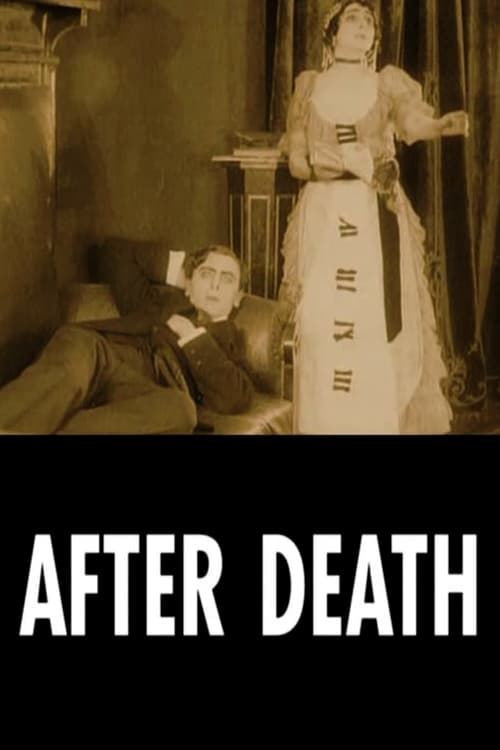
After Death
1915
No user ratings available yet
Representation score: 1.1 out of 10
Representation Score
Minimal
1915
Director
Yevgeni Bauer
Runtime
37 minutes
Average Rating
No ratings yetNew Showbiz Analysis
Daydreams is a traditional period melodrama centered on grief and romantic obsession. The narrative structure relies on established melancholic clichés, focusing almost exclusively on the psychological state of a bereaved man. The film lacks diverse representation, adhering to the homogeneous social structures of its era. It functions as a character study of personal loss rather than a subversion of social structures. While the protagonist's vulnerability offers a slight departure from stoic male archetypes, the female presence is largely defined by her relationship to the male lead.
Category Breakdown
The story focuses on a heterosexual relationship between a husband and his deceased wife. There is no representation of LGBTQ+ identities or critiques of heterosexuality.
The story centers on a male protagonist's emotional journey. While it explores male vulnerability, the female character remains passive, serving mainly as an object of memory and a catalyst for grief.
Reflecting the homogeneous social structures of the 1915 Russian Empire, the film adheres to the traditional casting norms of the early silent era.
The film operates within a traditional framework of romantic tragedy. It focuses on individual mourning rather than critiques of societal or religious institutions.
The protagonist's inconsolable state touches upon psychological distress. However, there is no specific evidence regarding the depiction of mental health or physical disabilities.
Present on Screen
Limited or Absent
Official Synopsis
Sergei’s beloved wife Yelena has passed away, and the bereaved husband is inconsolable. He remains obsessed with pictures of Yelena and with a braid of her hair that he has saved. One day, while walking in the street, he passes by a woman who bears a striking resemblance to Yelena.
1915

1974

1916

1927
1917

1915
1906

1917
No reviews yet. Be the first to share your thoughts on this movie!
Use the rating form above to leave a star rating and optional review.