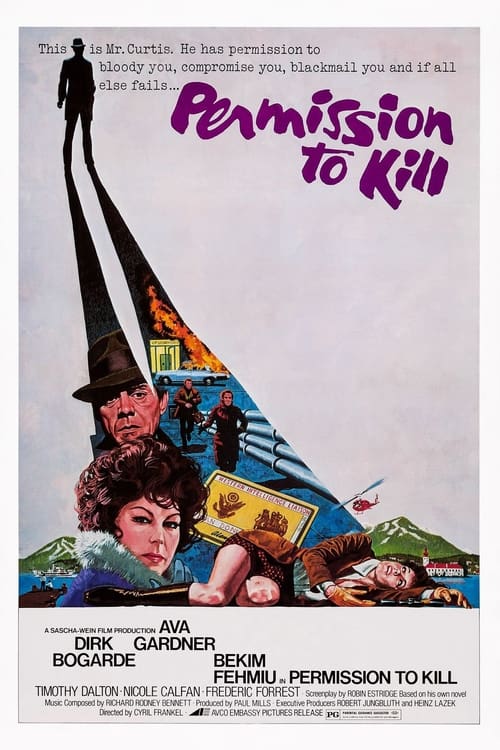
Permission to Kill
1975
No user ratings available yet
Diversity score: 2.9 out of 10

1962
ApprovedDirector
Anthony Asquith
Runtime
102 minutes
Average Rating
No ratings yetSynopsis
Committed pacifist Tom Jordan's decision to help former President Rivera escape a military coup is a simple act of mercy that takes him and his wife to the edge of despair. It turns them into outlaws and fugitives, hunted by a vicious South American regime; yet it could also bring them together in a way they have never been before.
Overall Score
Limited
Category Breakdown
LGBTQ+ Representation
The film operates within a traditional mid-century framework. It features no LGBTQ+ characters or non-heteronormative identities.
Gender Representation
Narratives center on masculine-coded spheres of labor and politics. Women occupy domestic or supportive roles typical of the era's social hierarchy.
Racial & Ethnic Diversity
The cast is primarily composed of white Welsh actors. It lacks intersectional breadth or non-Anglo-Saxon perspectives.
Religious & Cultural Diversity
The story provides a sophisticated anti-capitalist critique. It frames the central conflict as a struggle between labor and industrial owners.
Disability Representation
There is no intentional focus on neurodivergence or physical disabilities. Characters are defined by socioeconomic status rather than disability.
Strengths
Areas for Improvement
AI Analysis
Guns of Darkness is a period drama that prioritizes class-based conflict over identity-based representation. It functions as a critique of systemic authority and industrial capitalism, focusing on the moral friction between individuals and institutions. While the film excels in its cultural exploration of labor struggles, it remains limited by the demographic realities of its 19th-century setting. The lack of racial and gender diversity reflects historical homogeneity rather than modern representational standards. Ultimately, the film's strength lies in its political themes, though it offers little in the way of LGBTQ+ or disability representation.
1975
1962
1959

1967
1953
1981
1967
1979

2020

1947

1969
1944
No reviews yet. Be the first to share your thoughts on this movie!
Use the rating form above to leave a star rating and optional review.