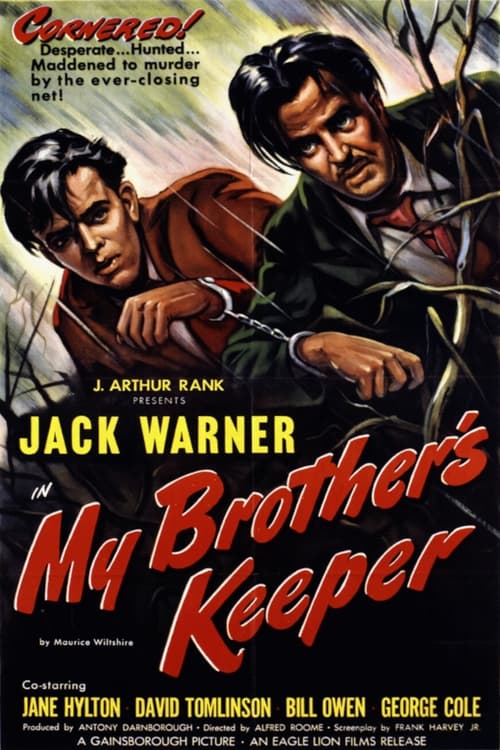
My Brother's Keeper
1948
No user ratings available yet
Representation score: 1.0 out of 10

Representation Score
Limited
1947
NRDirector
Alberto Cavalcanti
Runtime
99 minutes
Average Rating
No ratings yetNew Showbiz Analysis
Alberto Cavalcanti’s noir centers on a narrow demographic, focusing mainly on the masculine experience of social exclusion. The film lacks representation of LGBTQ+ identities, racial diversity, and disabilities, reflecting the homogeneous social norms of post-war Britain. However, the film excels in its cultural critique. It goes beyond typical crime stories to explore how systemic failures and institutional corruption push individuals towards perceived criminality. Ultimately, while the film is demographically limited, it succeeds as a sophisticated deconstruction of state authority and the social stigma faced by underrepresented groups.
Category Breakdown
The film does not include any identifiable LGBTQ+ characters or stories. The social interactions follow traditional norms of the time.
The story focuses on a male protagonist's journey within a patriarchal society. Women play mostly supportive or domestic roles, upholding traditional hierarchies.
Set in 1947 London, the cast and setting are predominantly white. There is no significant racial diversity in the main storyline.
The film effectively critiques institutional structures and systemic stigma. It provides a nuanced look at the underclass and questions the morality of the legal system.
The film does not prominently feature characters with visible or invisible disabilities. The protagonist's struggles stem from social isolation rather than physical or cognitive differences.
Present on Screen
Limited or Absent
Official Synopsis
After being framed for a policeman's murder, a criminal escapes prison and sets out for revenge.
1948
1948
1953
1947
1957
1956
2005
1949
No reviews yet. Be the first to share your thoughts on this movie!
Use the rating form above to leave a star rating and optional review.