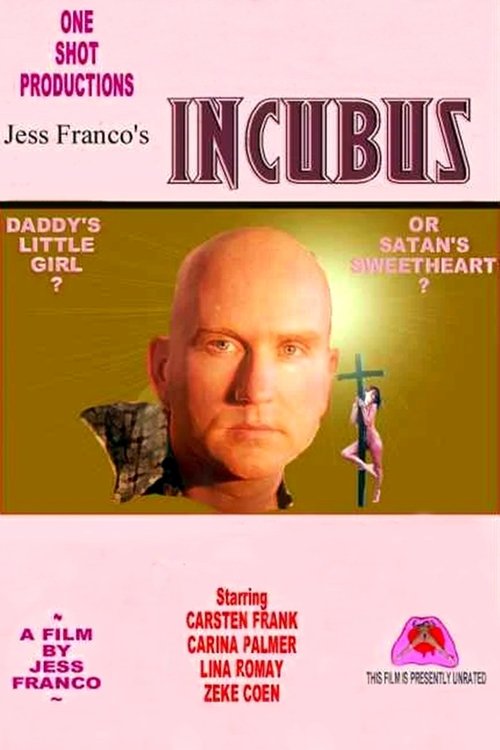
Incubus
2002
No user ratings available yet
Representation score: 2.5 out of 10

Representation Score
Fair
1983
UnratedDirector
Jesús Franco
Runtime
80 minutes
Average Rating
No ratings yetNew Showbiz Analysis
Jesús Franco’s work utilizes the transgressive nature of exploitation cinema to challenge mainstream moral and social frameworks. The film succeeds in challenging traditional gender hierarchies by placing a female entity in a position of absolute cosmic power and ability to act. However, the film's engagement with non-Western spirituality remains ambiguous. While it centers on Afro-Brazilian religious themes, it is difficult to determine if this is a meaningful cultural exploration or a reliance on the exoticized clichés common to 1980s genre cinema. Ultimately, the film functions as a critique of Western stability. By casting Western social archetypes as hapless victims of an ancient goddess, it disrupts conventional expectations of religious and social order.
Category Breakdown
The film focuses on a central female deity and a heterosexual couple, with no specific LGBTQ+ identities or narratives that question the assumption that everyone is straight or cisgender.
Princess Obongo disrupts traditional hierarchies by centering power in a female figure. She has the ability to act to manipulate male characters, elevating female power to a cosmic scale.
The film engages with Afro-Brazilian spiritual themes through the concept of Macumba. However, it is unclear if this represents a meaningful exploration of diverse backgrounds or relies on era-specific exoticized clichés.
The film challenges Western norms by prioritizing non-Christian, occult frameworks. It positions Western capitalist symbols, like yuppies, as vulnerable victims of a non-Western goddess.
There is no discernible information regarding the portrayal of physical or neurodivergent disabilities within the film's narrative.
Present on Screen
Limited or Absent
Official Synopsis
Princess Obongo, the Goddess of Unspeakable Lust, uses dark powers to ensnare a hapless couple of yuppies, so that she can imbue them with evil and conquer the world.
2002
1964
2012

1977

1968

1973
1977

1974
No reviews yet. Be the first to share your thoughts on this movie!
Use the rating form above to leave a star rating and optional review.