The Last Days of Pompeii
1908
No user ratings available yet
Representation score: 2.9 out of 10
Representation Score
Limited
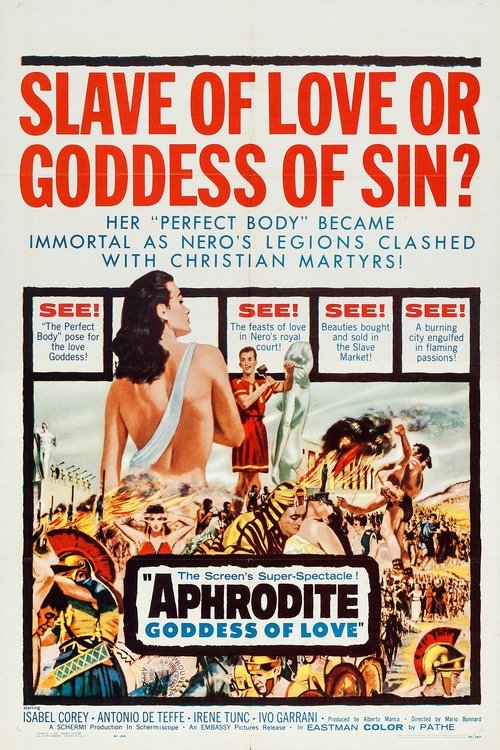
1958
Director
Mario Bonnard
Runtime
100 minutes
Average Rating
No ratings yetNew Showbiz Analysis
Aphrodite, Goddess of Love (1958) is a conventional historical drama that emphasizes classic romantic clichés and the melodrama of a sculptor and a slave. It focuses on traditional power dynamics and heterosexual relationships rather than diverse or subversive storytelling. While the film touches on systemic hardships such as taxation and plague, these elements serve the historical context rather than actively challenging social hierarchies. Ultimately, the production adheres to mid-century cinematic standards, emphasizing traditional narratives over modern multi-layered approaches.
Category Breakdown
The film centers on a heterosexual relationship between a sculptor and a slave, without showing any same-sex intimacy or non-binary gender identities.
The story follows traditional gender roles, where the female slave’s role is primarily defined by her relationship to the male protagonist, despite her potential emotional impact.
Set in ancient times, the film features a variety of ethnic types typical of the era. However, it does not challenge the social hierarchies of the time or use status to critique systemic issues.
The plot examines the tension between religious devotion and the hardships of plague and taxation. It functions as a traditional tragedy without deconstructing religious institutions.
The film does not depict any visible or invisible disabilities, nor does it address neurodivergence or physical impairments.
Present on Screen
Limited or Absent
Official Synopsis
The construction of great temple dedicated to the goddess Aphrodite, followed by new and high taxes and the arrival of a plague, create discontent in the population, and threatens the love between a sculptor and a slave.
1908

1955

1924

1914

1912

2004

1932

1951
No reviews yet. Be the first to share your thoughts on this movie!
Use the rating form above to leave a star rating and optional review.