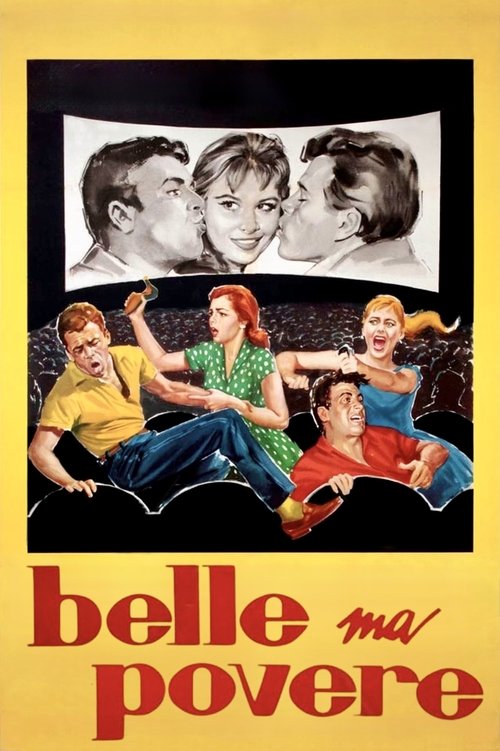
Poor Girl, Pretty Girl
1957
No user ratings available yet
Representation score: 3.1 out of 10
Representation Score
Limited
1955
Director
Dino Risi
Runtime
101 minutes
Average Rating
No ratings yetNew Showbiz Analysis
Dino Risi’s comedy explores the tension between personal desires and societal norms. By focusing on the romantic lives of Agnese and Cesira, the film shifts the focus from male-driven action to female subjectivity. While the film provides a meaningful look at gendered experiences, it remains limited by the demographic homogeneity typical of 1950s European cinema. The absence of racial or LGBTQ+ representation reflects the cultural specifics of the era. Ultimately, the film serves as a character study of women navigating social norms. It challenges passive female roles but lacks the broad representation of modern storytelling.
Category Breakdown
The film does not include any explicit LGBTQ+ characters or non-straight relationships. The story revolves around traditional romantic comedies.
The movie challenges gender norms by focusing on the desires and social interactions of women. Agnese and Cesira drive the plot through their unique romantic experiences.
The film reflects the demographics of its time, showing a homogeneous cast without any indication of racial or ethnic diversity.
The narrative uses humor to explore personal morality and social dynamics. It moves beyond rigid moral rules to focus on situational ethics.
There is no mention of characters with physical or neurodivergent disabilities in this film.
Present on Screen
Limited or Absent
Official Synopsis
Agnese has many men who woo her and live with her cousin Cesira, who has the opposite problem with men and wishes she would also have men woo her.
1957
1955
1955
1964
1987
1953
1969
1972
No reviews yet. Be the first to share your thoughts on this movie!
Use the rating form above to leave a star rating and optional review.