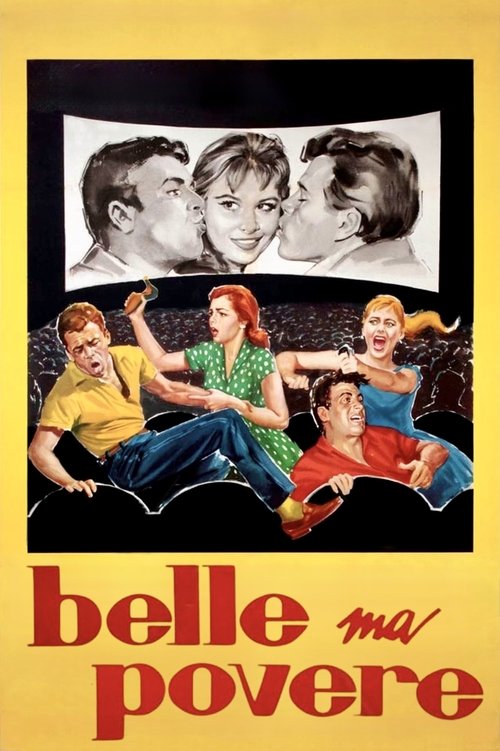
Poor Girl, Pretty Girl
1957
No user ratings available yet
Representation score: 3.1 out of 10

Representation Score
Limited
1987
Director
Dino Risi
Runtime
98 minutes
Average Rating
No ratings yetNew Showbiz Analysis
Teresa's journey highlights her autonomy and growth in a changing social environment. By focusing on her professional and personal development, the film counters the male-dominated perspective typical of its era. However, the film remains tied to the demographic and social contexts of late 20th-century Italy. It lacks the broad multi-layered approach and critical examination seen in more modern films. The narrative primarily focuses on traditional romantic structures and a localized social reality that lacks racial or LGBTQ diversity.
Category Breakdown
The film centers on traditional romantic relationships and assumes everyone is straight or cisgender. It does not include non-assuming gender matches what was assigned at birth gender identities or queer stories.
The story focuses on the female experience, emphasizing Teresa's role in managing her business and personal life. This challenges traditional passive feminine stereotypes.
The narrative is set in a predominantly white Italian context, reflecting the demographic homogeneity of its time and place.
The film examines socioeconomic changes and questions traditional institutions like marriage. However, it does not explicitly challenge Western cultural norms.
There is no mention of visible or invisible disabilities among the characters or in the storyline.
Present on Screen
Limited or Absent
Official Synopsis
Teresa is a young widow who is concentrated on her little business until she hires Gino.
1957
1955
1972
1964
1978
1955
1984
1959
No reviews yet. Be the first to share your thoughts on this movie!
Use the rating form above to leave a star rating and optional review.