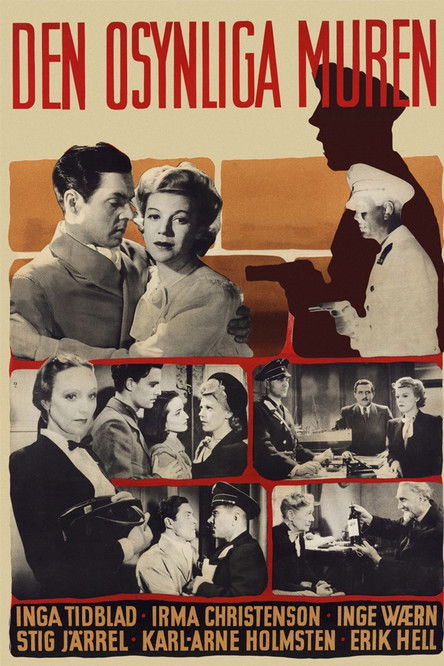
The Invisible Wall
1944
No user ratings available yet
Representation score: 1.9 out of 10
Representation Score
Limited
1968
Director
Pierre Kast, Jean-Daniel Pollet
Runtime
90 minutes
Average Rating
No ratings yetNew Showbiz Analysis
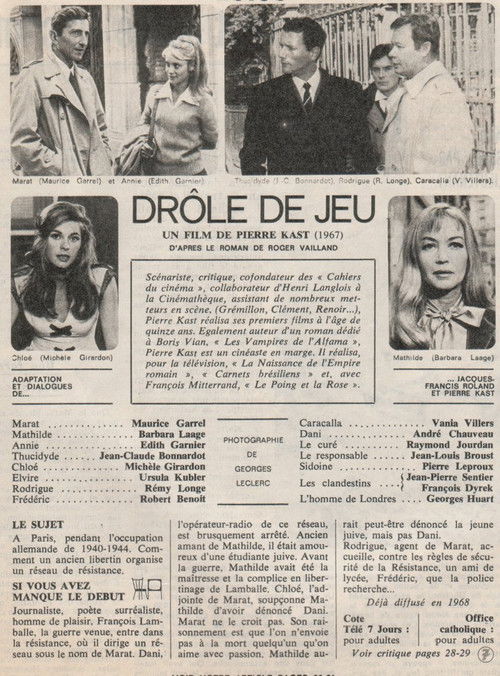
Strange Game is a product of the French New Wave, emphasizing stylistic experimentation and the deconstruction of conventional storytelling. Its focus on the 1944 Paris resistance movement anchors the film in a specific, historically constrained socio-political landscape. The film delves into moral ambiguity and the corruption of established systems through its search for a traitor. However, these themes are tied to wartime occupation rather than broader progressive social representation. Ultimately, Strange Game serves as a period drama that examines power dynamics without explicitly centering diverse identities or challenging traditional social hierarchies.
Category Breakdown
The film does not include any explicit LGBTQ+ characters or stories. Although the French New Wave often explored unconventional social dynamics, this film focuses on the resistance movement rather than non-straight identities.
The story centers around a male leader searching for a traitor among the resistance fighters. While women played key roles in the resistance, their specific contributions and intellectual roles are not detailed in the film.
Set in 1944 Paris, the story focuses on a specific local resistance network. There is no indication of a racially diverse cast or race-bent casting to broaden the scope.
The film critiques occupying forces and systemic corruption, exploring moral ambiguity and power dynamics. However, it does not address anti-Western or anti-capitalist sentiments explicitly.
There is no information about the depiction of physically or neurodivergent characters in this work.
Present on Screen
Limited or Absent
Official Synopsis
In 1944, in Paris, the leader of a resistance network is looking for the traitor who gave away a radio operator.
1944

1945

1964
1949

1946
1965
1943
1960
No reviews yet. Be the first to share your thoughts on this movie!
Use the rating form above to leave a star rating and optional review.