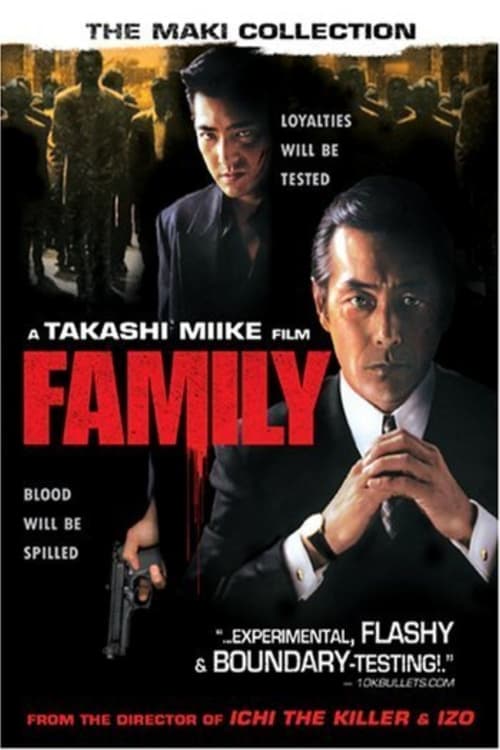
Family
2001
No user ratings available yet
Representation score: 5.3 out of 10

Representation Score
Minimal
2006
Director
Takashi Miike
Runtime
117 minutes
Average Rating
No ratings yetNew Showbiz Analysis
Sun Scarred is a conventional crime thriller that prioritizes established genre clichés over social subversion. The story is driven by a singular focus on masculine retribution and the protection of a traditional family unit. Because the film adheres to rigid demographic norms and traditional storytelling structures, it offers very little room for exploring diverse lived experiences. Characters primarily function to advance the revenge plot rather than to explore multi-layered identities. Ultimately, the work reinforces existing social hierarchies and gender roles, providing a narrow view of the human experience through a lens of localized, traditionalist conflict.
Category Breakdown
The film does not include any LGBTQ+ characters or narratives. It focuses solely on a traditional nuclear family, with no queer-coded subtext or identity-driven storylines.
The narrative relies on masculine archetypes, positioning the male protagonist as the primary driver of action. Female characters serve as emotional catalysts but remain passive recipients of the plot's violence.
The setting presents a homogeneous social landscape typical of a localized Japanese crime drama. There is no evidence of diverse ethnic perspectives or multi-layered racial blending.
The plot centers on traditionalist clichés of family sanctity and personal vengeance. It operates within a framework of individual morality rather than critiquing broader social or institutional structures.
There is no indication of characters with visible or invisible disabilities. Neurodivergence and physical impairments do not play a role in the film's narrative structure.
Present on Screen
Limited or Absent
Official Synopsis
Katayama is on the way home to his wife and little daughter when he comes across a gang of punks beating up an innocent man. Katamaya decides to help the stranger and surprisingly wins the fight. This turns out to be a bad decision.
2001
1973
1993

2009

2007
1983
1997
2014
No reviews yet. Be the first to share your thoughts on this movie!
Use the rating form above to leave a star rating and optional review.