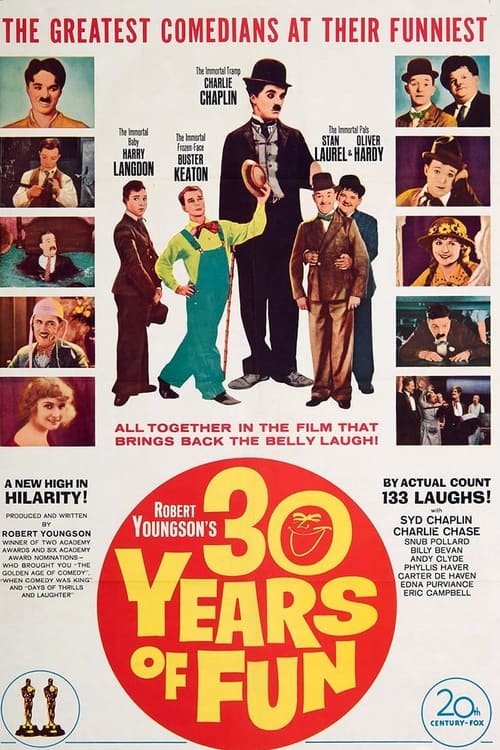
30 Years of Fun
1963
No user ratings available yet
Representation score: 3.1 out of 10
Representation Score
Limited
1965
ApprovedDirector
Robert Youngson
Runtime
91 minutes
Average Rating
No ratings yetNew Showbiz Analysis
Robert Youngson’s retrospective captures the social hierarchies of the 1920s and 30s. Because it relies on archival slapstick, it inherently reflects the era's traditionalist frameworks and limited characters who reflect more than one aspect of diversity. The film prioritizes the preservation of physical comedy over social commentary, adhering to the established cultural norms of the original Hal Roach era shorts.
Category Breakdown
The compilation does not include any depictions of LGBTQ+ identities or queer narratives. The comedic focus remains strictly within the heterosexual social structures of the early sound era.
Women appear in the cast but often serve as catalysts for male embarrassment. The shorts do not prioritize women's ability to drive the story, instead leaning into traditional comedic hierarchies.
Representation is largely homogeneous, reflecting the demographic norms of early Hollywood. The footage centers a white, Western perspective through the 'everyman' personas of the central duo.
The film celebrates traditional comedic values and working-class themes through slapstick. It functions as a nostalgic tribute to a specific era of Western entertainment rather than a critique.
Physical vulnerability and bodily clumsiness are used as primary sources of humor. These clichés do not provide nuanced portrayals of disability or neurodivergence.
Present on Screen
Limited or Absent
Official Synopsis
A compilation of primarly Laurel and Hardy shorts---From Soup to Nuts, Wrong Again, Putting the Pants on Philip, The Finishing Touch, Sugar Daddies and short clips from others---plus Max Davidson's Call of the Cuckoo and Dumb Daddies, with some cross-over Charley Chase footage, which, along with Robert Youngson's previous "The Golden Age of Comedy", "When Comedy Was King", "Days of Thrills and Laughter", led to a renewed interest in and a revival of television showings of Laurel and Hardy shorts. The cast was billed in order of their appearance: Oliver Hardy, Stan Laurel, Vivien Oakland (with a Vivian typo), Glen Tyron, Edna Murphy, Anita Garvin, Tiny Sanford, Jimmy Finlayson, Charlie Chase, Viola Richard, Max Davidson, Del Henderson, Josephine Crowell, Anders Randolf (as Anders Randolph), Edgar Kennedy, Dorothy Coburn, Lillian Elliott and "Spec" O'Donnell.
1963
1975
1960
1936
1957
1986
1965

2004
No reviews yet. Be the first to share your thoughts on this movie!
Use the rating form above to leave a star rating and optional review.