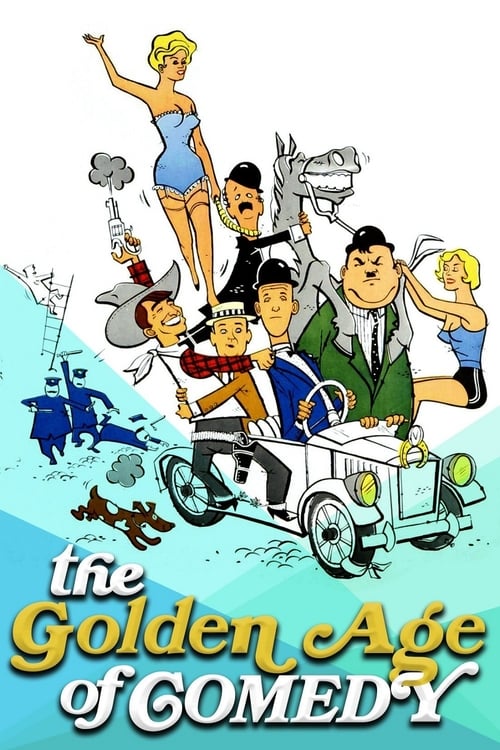
The Golden Age of Comedy
1957
No user ratings available yet
Representation score: 2.3 out of 10
Representation Score
Limited
1960
Director
Robert Youngson
Runtime
81 minutes
Average Rating
No ratings yetNew Showbiz Analysis
This documentary serves as a historical retrospective, preserving the kinetic energy of silent film legends such as Buster Keaton and Charlie Chaplin. Given its use of archival footage, it inherently reflects the social constraints and production norms of the early 20th century. The compilation lacks characters who reflect more than one aspect of diversity, focusing primarily on white performers and settings that align with traditional gender roles and societal norms of the time. While the film celebrates the technical mastery of slapstick comedy, it does not aim to disrupt the racial or social status quo of the period it documents.
Category Breakdown
The archival footage does not include any clear representations of LGBTQ+ identities or same-sex relationships. It focuses solely on the established comedic archetypes of the silent film era.
Women in the clips mainly serve as romantic interests, domestic figures, or comedic foils for male leads. The footage reinforces traditional gender roles prevalent in early 20th-century society.
The cast is predominantly white, reflecting the homogeneous demographics of mainstream silent cinema. The vignettes focus on Anglo-centric social settings without significant representation of non-white individuals.
The film maintains a neutral stance towards cultural institutions and does not critique Western capitalism. Slapstick humor provides a mild, unintentional subversion of social norms.
The reliance on exaggerated physicality and mishaps lacks a nuanced portrayal of disabilities or neurodivergence. The film does not use disability as a narrative device.
Present on Screen
Limited or Absent
Official Synopsis
A compilation featuring comedic stars of the silent era including Fatty Arbuckle, Charles Chaplin, Buster Keaton, Charley Chase, and Laurel and Hardy.
1957
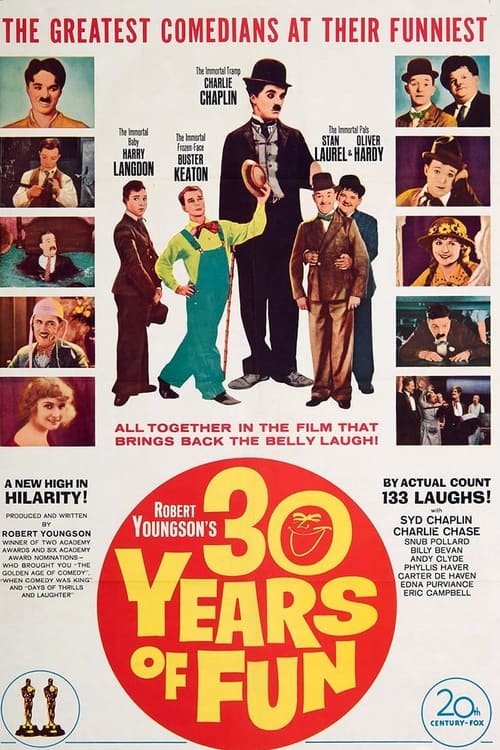
1963
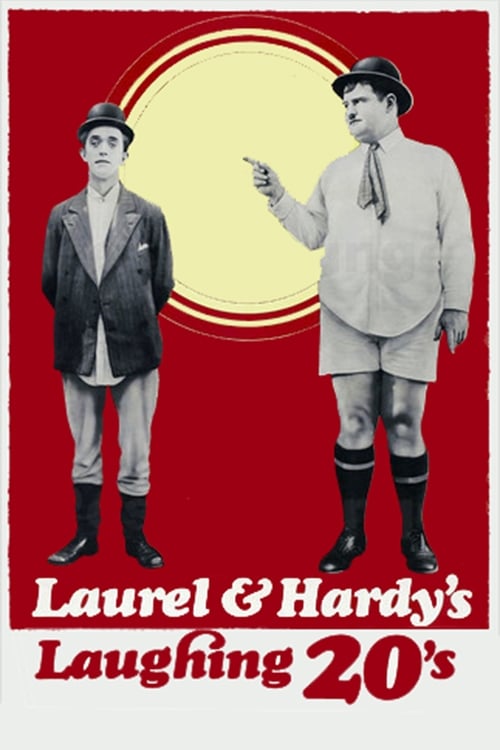
1965
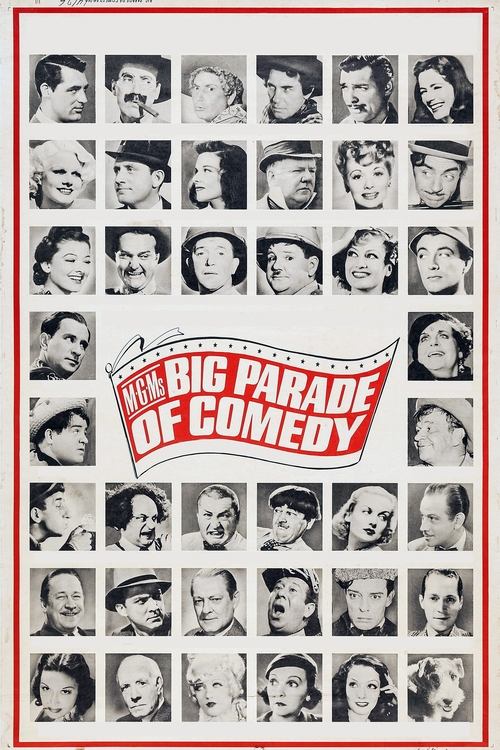
1964
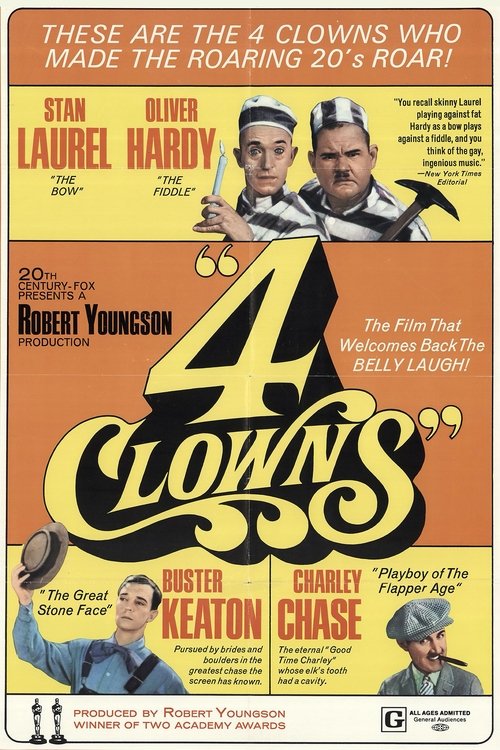
1970
1955
1997
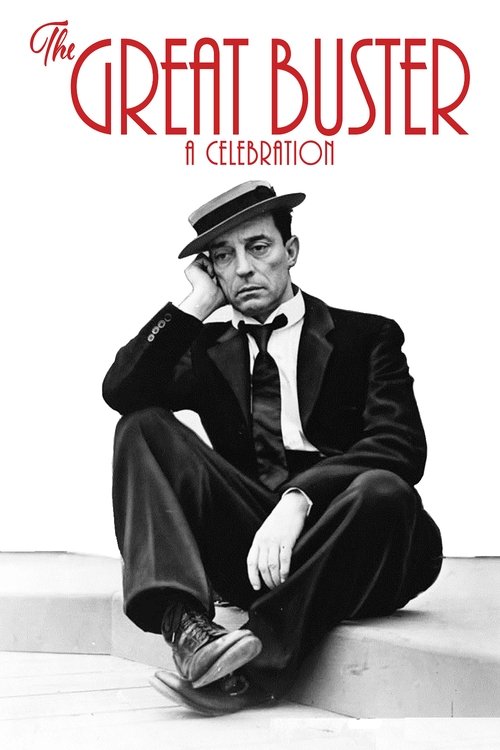
2018
No reviews yet. Be the first to share your thoughts on this movie!
Use the rating form above to leave a star rating and optional review.