
Forbidden Kisses
1956
No user ratings available yet
Representation score: 1.8 out of 10
Representation Score
Minimal
1951
ApprovedDirector
Curtis Bernhardt
Runtime
90 minutes
Average Rating
No ratings yetNew Showbiz Analysis
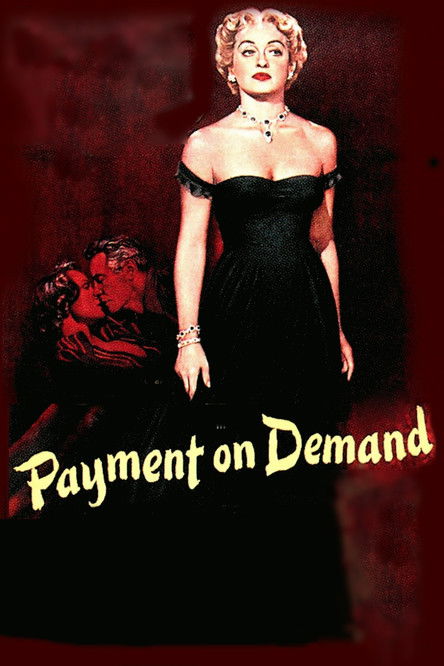
Payment on Demand is a mid-century melodrama that centers on personal psychological conflicts rather than social critique. While it offers a degree of female independence through its protagonist, the story ultimately upholds the conservative social hierarchies of the 1950s. The film’s setting and themes are firmly grounded in a Western, high-society perspective. It leverages locations and class tensions to fuel personal drama without delving into broader cultural or systemic issues. Overall, the film adheres to the established norms of its time, emphasizing the preservation of traditional marital structures and social norms.
Category Breakdown
The film focuses solely on heterosexual relationships and traditional marriages. It does not depict any non-straight or non-cisgender identities or same-sex relationships.
Joyce demonstrates independence and self-reliance through her travels and decisions during her separation. However, the plot revolves around traditional gender roles and family dynamics.
The cast is primarily white, reflecting the industry standards of the time. The Caribbean setting is used as a backdrop for melodrama rather than a platform for meaningful local representation.
The narrative examines class differences and social etiquette through a Western perspective. It emphasizes personal morality and marital stability over broader social critiques.
There are no visible or invisible disabilities featured as central to the character development or the storyline.
Present on Screen
Limited or Absent
Official Synopsis
David gives his wife, Joyce, an unexpected—and unpleasant—surprise when he suddenly demands a divorce. When she then learns that David has taken up with a younger woman, Joyce decides to make the most of this separation by taking a solo trip to the Caribbean. However, just before diving into a vacation fling, she runs into Emily, an old chum whose own divorce has left her embittered. Joyce then debates giving married life one last chance.
1956
1952
1951
1939

1932

1954
1931
1939
No reviews yet. Be the first to share your thoughts on this movie!
Use the rating form above to leave a star rating and optional review.