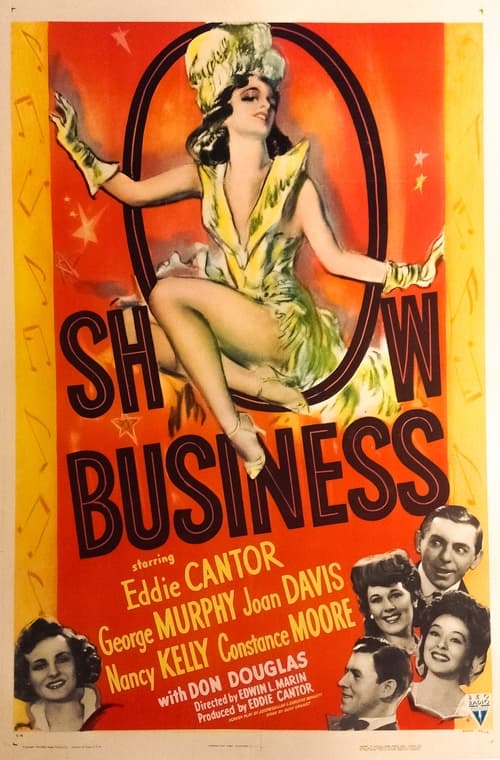
Show Business
1944
No user ratings available yet
Representation score: 1.1 out of 10
Representation Score
Minimal
1941
ApprovedDirector
William Nigh
Runtime
61 minutes
Average Rating
No ratings yetNew Showbiz Analysis
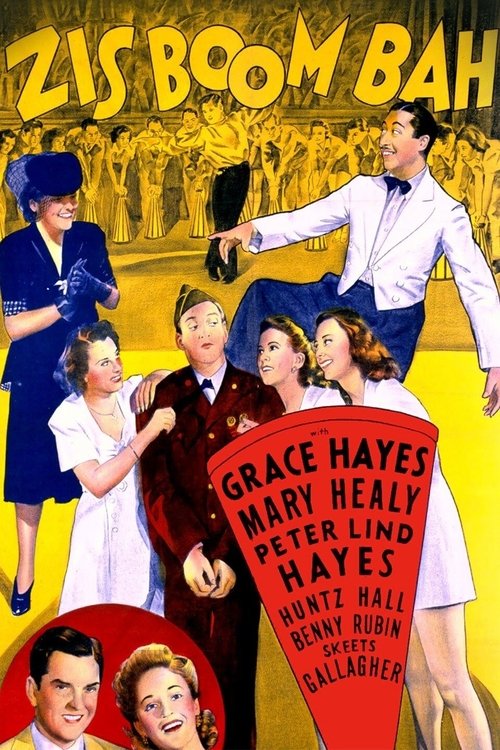
Zis Boom Bah is a period-typical musical comedy that prioritizes escapism over social critique. While it offers a refreshing look at a female protagonist with economic independence, the film operates within the rigid social frameworks of the early 1940s. The narrative centers on restoring spirit and values to a struggling college, reinforcing existing institutional hierarchies rather than challenging them. The lack of racial or LGBTQ+ representation aligns with the era's demographic homogeneity. Ultimately, the film serves as a showcase for vaudeville-style entertainment, using class friction as a plot device to drive a story about community stability and traditional success.
Category Breakdown
The film follows a traditional romantic-comedy structure centered around family relationships. There are no depictions of same-sex intimacy or non-conforming gender identities.
Grace Hayes is a strong female lead, showing independence and resilience while facing economic hardships. However, her role remains tied to traditional maternal motivations.
The cast appears uniform, reflecting the typical demographic patterns of 1941 musical comedies. No diverse casting or non-Anglo-Saxon characters are mentioned.
The story examines class tensions between wealthy families and working-class performers. It ultimately upholds Western institutional values by focusing on saving a traditional college.
The narrative contains no documented evidence of characters with visible or invisible disabilities.
Present on Screen
Limited or Absent
Official Synopsis
"Hey, kids, let's get together and put on a show!" That's the idea behind this raucous spoof about a vaudeville performer who's sent to college to spy on his bratty son.
1944

1941
1945

1933

1940
1954

1943
1943
No reviews yet. Be the first to share your thoughts on this movie!
Use the rating form above to leave a star rating and optional review.