Kiss Me Kate
1953
No user ratings available yet
Representation score: 0.8 out of 10
Representation Score
Limited
1941
ApprovedDirector
H. C. Potter
Runtime
84 minutes
Average Rating
No ratings yetNew Showbiz Analysis
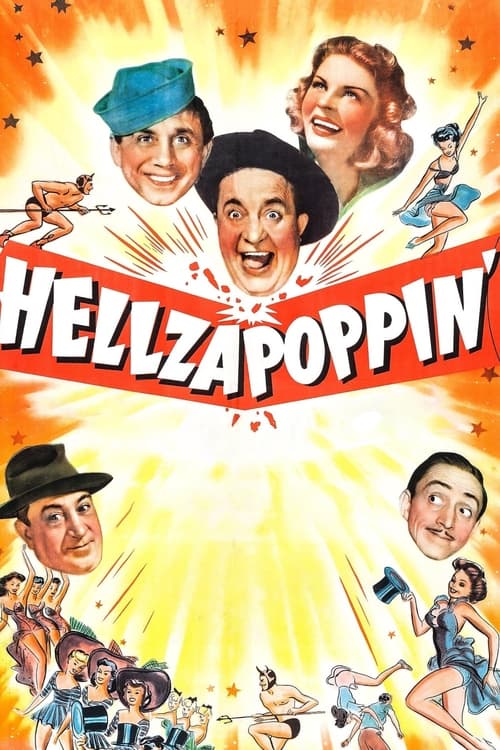
Hellzapoppin' serves as a high-energy vehicle for vaudeville-style entertainment, prioritizing rapid-fire gags and meta-textual playfulness over social commentary. Its stylistic choice to break the fourth wall disrupts viewer immersion but does not aim to challenge identity-based hierarchies. The film reinforces rather than deconstructs the social and demographic norms of the early 20th century. It relies on traditional comedic archetypes that maintain established power structures. Ultimately, the production is a quintessential product of its era, focusing on genre conventions and narrative cohesion within a traditional studio-era framework.
Category Breakdown
The film follows the assumption that everyone is straight or cisgender. There are no LGBTQ+ identities or critiques of traditional romantic structures.
The dynamics revolve around the slapstick humor of male leads Olsen and Johnson. Female characters mainly support the male-driven storyline and lack the ability to drive the plot.
Casting focuses on a homogeneous demographic typical of 1941. The film lacks diverse ethnic perspectives and does not feature characters of color in leading roles.
The film uses chaotic slapstick to disrupt social order, but this serves as nonsensical comedy rather than a systematic critique of Western institutions like religion or capitalism.
Physical clumsiness is used as a comedic device. While no characters are specifically mocked, the film lacks nuanced representation of disability.
Present on Screen
Limited or Absent
Official Synopsis
Olsen and Johnson, a pair of stage comedians, try to turn their play into a movie and bring together a young couple in love, while breaking the fourth wall every step of the way.
1953

1933
1943
1954

1946

1931
1950
1929
No reviews yet. Be the first to share your thoughts on this movie!
Use the rating form above to leave a star rating and optional review.