Graf Porno bläst zum Zapfenstreich
1970
No user ratings available yet
Representation score: 1.9 out of 10
Representation Score
Minimal
1969
Director
Werner Jacobs
Runtime
93 minutes
Average Rating
No ratings yetNew Showbiz Analysis
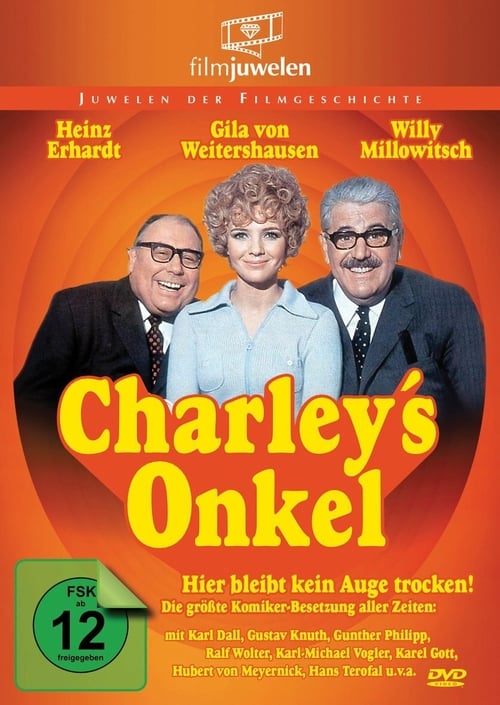
Charleys Onkel is a typical late-1960s European sex comedy that prioritizes escapism and situational chaos. While the female protagonist shows some professional autonomy, the story remains tied to traditional gender roles and the unwanted admirer cliché. The film operates within a narrow social context. It lacks representation of diverse racial, ethnic, or LGBTQ+ identities, reflecting the homogeneous commercial cinema of its time. Ultimately, the film serves as a period piece that upholds standard social norms rather than challenging them through identity-focused storytelling.
Category Breakdown
The film focuses on heterosexual relationships and the 'playgirl' stereotype. There is no representation of non-binary gender identities or criticism of heterosexuality.
Charley takes control by quitting her job to gain independence. However, the plot depends on traditional clichés of male protection and female attractiveness.
The film reflects the homogeneous society of 1969 West Germany. There are no diverse characters or non-white actors.
The narrative follows conventional social structures and mid-century values. It emphasizes light-hearted entertainment without critiquing Western institutions or morality.
There are no characters with visible or invisible disabilities in the story.
Present on Screen
Limited or Absent
Official Synopsis
Driving instructor Carola "Charley" can no longer stand the constant advances of her pupils and quits her job without further ado. To gain some distance, she takes the opportunity to look after her friend Lilo's dog, the two parrots and her apartment while Lilo is on vacation. But even here she has to fend off unloved admirers, as Lilo earns her living as a playgirl. However, "Charley" has received a good tip from her friend: As soon as a man becomes too pushy, janitor Pinkus pretends to be "Captain Tressblekken" on cue and quickly chases the visitors away. But when the real Uncle Tressblekken turns up at "Charley's" house, chaos can no longer be averted...
1970

1970
1996
1977
1959
1969
1972
1973
No reviews yet. Be the first to share your thoughts on this movie!
Use the rating form above to leave a star rating and optional review.