Through Deaf Eyes
2007
No user ratings available yet
Representation score: 8.8 out of 10
Representation Score
Good
1960
Director
Edmond Levy
Runtime
16 minutes
Average Rating
No ratings yetNew Showbiz Analysis
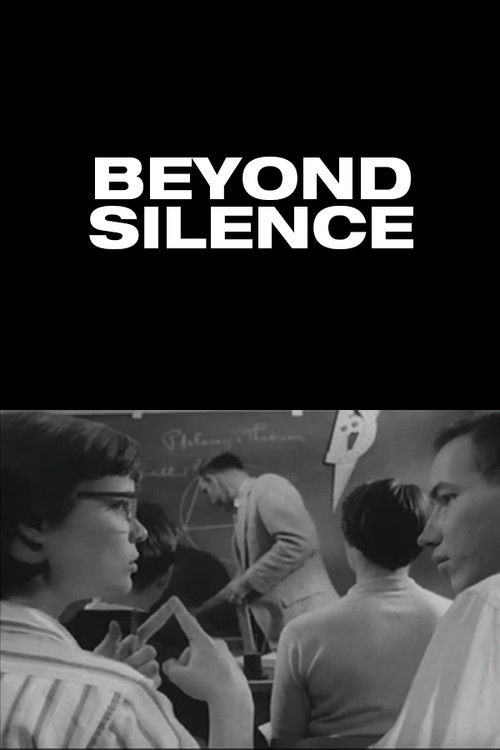
Beyond Silence is a groundbreaking documentary that centers on the lives of the deaf community at Gallaudet University. It stands out by presenting its subjects as active intellectual leaders rather than passive participants. While the film gives a significant role in driving the story to the deaf community, it lacks the depth expected in contemporary cinema regarding LGBTQ+ narratives and the intersection of race and gender. Ultimately, the film serves as a crucial historical document that challenges the mid-20th-century communication norms by highlighting a community that functions outside traditional auditory structures.
Category Breakdown
The film does not include explicit LGBTQ+ characters or stories about non-straight relationships. This reflects the documentary's focus on the time period and social norms of the 1960s.
The film highlights the intellectual capabilities of women in the deaf community. However, it does not explicitly show how gender roles are challenged or subverted.
The documentary looks at the intersection of disability and race at Gallaudet University. It provides a basic level of representation within the context of the 1960s social framework.
By focusing on a community that communicates without relying on sound, the film challenges the dominance of spoken language. It also highlights the systemic barriers faced by those who rely on visual communication.
The film portrays the deaf community as a sophisticated, self-governing intellectual group. It avoids seeing deafness as a disadvantage and instead emphasizes the academic achievements of its subjects.
Present on Screen
Limited or Absent
Official Synopsis
This Oscar-nominated film shows Gallaudet University in Washington D.C. near its 100th year as the only school of higher learning for the deaf and extreme hard of hearing.
2007

2002
1986
1954
1992
1986
1986

2016
No reviews yet. Be the first to share your thoughts on this movie!
Use the rating form above to leave a star rating and optional review.